Best Books for Understanding Myers Briggs Types and Growing Your Self
Finding the best books for understanding myers briggs types is like finding the perfect sunny spot on the floor because it just makes everything feel right. It helps you stop...

ScoreRead Editorial Team
Editorial Team

Best Books for Understanding Myers Briggs Types and Growing Your Self
Finding the best books for understanding myers briggs types is like finding the perfect sunny spot on the floor because it just makes everything feel right. It helps you stop feeling like a misunderstood outsider and gives you the tools to finally feel empowered.
Learning your personality type isn't just about labels. It's about realizing your unique traits are actually normal patterns that help you improve self-awareness and fix relationship friction.
You'll see the top picks for classic theory, relationship advice, and the real science behind your brain patterns to help you grow.
Table of Contents
- What to Read When Feeling Misunderstood by Your MBTI Type
- Best Books for Navigating MBTI Relationship Challenges
- How to Improve Self-Awareness Through MBTI Books and Journaling
- The Science of You and Brain Patterns
- INFJ Personality Development Books for Growth and Balance
- Summary of the Best MBTI Resources
- Frequently Asked Questions
- Conclusion
What to Read When Feeling Misunderstood by Your MBTI Type
Feeling like an outsider is exhausting. You might think you are too loud, too quiet, or just plain "too much" for the people around you. Reading the right book is like finding the perfect sunny spot on the floor; it finally makes everything feel right. When you see your traits described as standard patterns, you realize you aren't broken, you're just a specific type.
A lot of this feeling comes from what experts call the inferior function. Naomi Quenk wrote extensively about how we act when we are stressed or overwhelmed. Sometimes we snap or get weirdly obsessive, and it feels like we aren't ourselves. Understanding this helps you see that these reactions are actually normal for your type. You can find more about this in best books for understanding introverted personality types and growth to see how these patterns play out.
Imagine a person who always felt guilty for needing hours of alone time after a party. They read 'Life Types' by Hirsh and Kummerow and suddenly see that their "antisocial" behavior is just a natural need to recharge. Instead of feeling like a failure, they start to appreciate their natural rhythm. This kind of mbti personality type books for personal growth and self awareness changes your whole perspective on your daily habits.
If you want to go back to where it all began, you have to look at 'Gifts Differing' by Isabel Briggs Myers. The classic 1995 revised edition is the gold standard for explaining how we perceive and judge the world. It turns complex psychology into something you can actually use in your life.
Business psychologist Claire Bremner famously said that Isabel’s explanation of type pressed the "Ah! Now I get it!" button for her. It is that moment of clarity when the fog lifts and you finally understand why you and your coworkers see the same problem in two totally different ways. It stops the hissing and starts the cooperation.
For those who want to get even more specific, there are now journals tailored to each of the 16 types. For instance, the INFJ Myers Briggs Personality Development Journal by ISQ Books is a 122-page guide released in 2022. It helps you track your growth and see how your specific traits are actually your greatest strengths.
Key insights:
- Look for 'Life Types' by Hirsh and Kummerow to see how your traits are standard patterns.
- Start with the 1995 revised edition of 'Gifts Differing' for the most accessible version of the theory.
- Read Naomi Quenk's work on the inferior function to understand your stress reactions.
- Try a type-specific journal from ISQ Books to move from general theory into personal growth.
The Classic Foundation of Gifts Differing
Why is this book considered the essential starting point for everyone? It is because Isabel Briggs Myers and Peter B. Myers provided the original roadmap for understanding how people perceive and judge their surroundings. This classic text explains that our differences are not random but follow predictable patterns that shape how we interact with the world.
Think of business psychologist Claire Bremner, who described reading the book as hitting an "Ah! Now I get it!" button. Suddenly, behaviors that seemed frustrating in others became understandable through the lens of type. It is one of those mbti personality type books for personal growth and self awareness that makes you feel seen rather than judged for your natural traits.
Key insights:
- Start with the 1995 revised edition to get the most accessible version of the theory.
- Read the specific chapters on learning styles to understand why some tasks feel like a chore while others come easily.
- Use the descriptions of the 16 types to identify your natural strengths and stop feeling like an outsider.
Best Books for Navigating MBTI Relationship Challenges
When you and your partner feel like you are constantly hissing at each other during disagreements, it is rarely because someone is trying to be difficult. Most of the time, you are just speaking two different mental languages. Using the best books for navigating mbti relationship challenges can help you translate those differences before a small spat turns into a full-blown standoff.
These resources help you move past the phase of thinking your partner is just being annoying and into a place of genuine curiosity. Instead of taking a partner's need for space or their sudden burst of energy personally, you start to see it as a natural function of their type. It is like finally getting the instruction manual for a very complicated, very lovable creature.
Take a couple where one person is a structured planner and the other is a spontaneous explorer. They used to fight every weekend about the schedule until they started using type-specific journals from ISQ Books. By tracking their daily reactions in these 122-page guides, they realized they weren't trying to control or ignore each other. They were just processing the world through different lenses. This shift in perspective is a huge part of how the best books for introverts and myers briggs types help you thrive as a duo.
If you want to understand the science behind these clashes, Dario Nardi’s research shows that different types actually use different brain patterns when solving problems. This means your partner isn't just being stubborn; their brain is literally wired to approach the situation from a different angle than yours.
Key insights:
- Use the 'Your Best Self' series of journals for daily reflection on how your specific type interacts with others.
- Look for the INFJ Myers Briggs Personality Development Journal if you or your partner belong to that type to track growth and stress triggers.
- Read 'Life Types' by Hirsh and Kummerow to get a quick, easy look into the fascinating world of people who think differently than you.
- Identify your 'inferior function' patterns using Naomi Quenk’s work to explain your stress reactions to your partner before they cause a conflict.
How to Improve Self-Awareness Through MBTI Books and Journaling
Reading a book can definitely spark an "aha" moment, but real change happens when you start tracking your own thoughts. Using mbti personality type books for personal growth and self awareness is about more than just learning labels. It is about finding that "sunny spot on the floor" where your traits finally feel normal instead of weird. When you move from abstract theory to daily evidence, you stop guessing and start growing.
By using a specific 122-page personality development journal, you can track how your type affects your energy and focus every single day. There are exactly 16 different personality types in the Myers-Briggs framework, and authors like ISQ Books have created specific journals for each one. These tools help you identify your natural learning styles and study habits, making it easier to lean into your strengths rather than fighting your nature.
Take an ESFP who has always felt like a failure in traditional, lecture-heavy classrooms. They might spend years thinking they are just unfocused or lazy. Then, they pick up a 122-page development journal and realize their brain is actually wired for action. Instead of struggling through a three-hour lecture, they learn that they need hands-on work and physical experience to stay engaged. This realization is a game changer for best books for overthinking and mental clarity because it removes the heavy mental clutter of self-blame and replaces it with a practical strategy.
This shift in perspective is exactly why experts like Claire Bremner say that Isabel Briggs Myers’ work presses the "Now I get it!" button. It turns self-improvement from a chore into a natural fit for your brain. You stop trying to be a different type and start being a better, more self-aware version of yourself.
Key insights:
- Commit to a 30-day journaling habit using a type-specific guide to identify your natural strengths.
- Look for the 'Your Best Self' series of journals to track how you process information differently than your peers.
- Pick a journal like the INFJ Myers Briggs Personality Development Journal if you need a structured path for personal growth.
- Use your journal to spot your 'inferior function' during stress so you can react with more grace when things get tough.
The Science of You and Brain Patterns

Many people wonder if personality types are just a fun quiz or if there is real data behind them. The truth is that researchers have spent decades mapping how our minds actually function. For instance, Dario Nardi’s 2011 book, Neuroscience of Personality, uses EEG technology to show that different types use specific brain regions to solve problems.
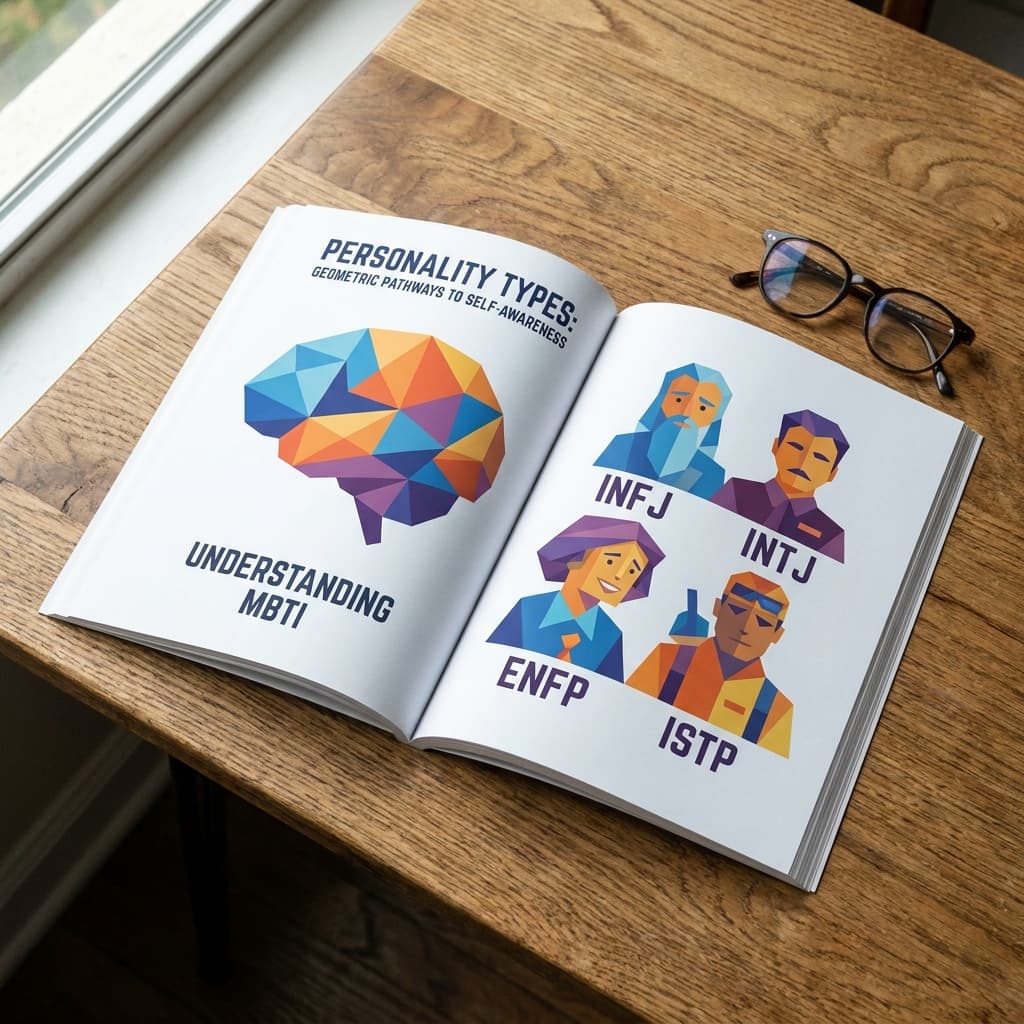
While the MBTI Manual provides the technical tables used by professionals, Nardi’s work makes the science visible. It proves that being an INTJ or an ENFP is more than just a label because it reflects how your neurons fire. This kind of mbti personality type books for personal growth and self awareness helps ground the theory in physical reality.
Imagine an INTJ and an ENFP sitting down to solve a complex puzzle together. To an observer, they both look quiet and focused, but inside their heads, the activity is completely different. Nardi found that an INTJ’s brain often enters a flow state where the whole cortex works together efficiently. Meanwhile, an ENFP’s brain might light up in a Christmas Tree pattern, bouncing quickly between different regions to find a creative solution.
Seeing these patterns makes it easier to stop judging yourself for how you think. If your brain is wired to look for patterns differently than your peers, it makes sense that you approach life from a unique angle. This is why best books for understanding introverted personality types and growth often lean on this hard data to help you build confidence.
Key insights:
- Read 'Neuroscience of Personality' if you need the hard data to believe in the framework.
- Check out the MBTI Manual for the technical tables used to validate the assessment's accuracy.
- Look for the 1995 revised edition of 'Gifts Differing' to see how the theory first started.
- Observe your own mental flow when you are working on a difficult task to see your type in action.
INFJ Personality Development Books for Growth and Balance
Being the rarest personality type often means general self-help feels like it was written for someone else. For an INFJ, growth isn't just about doing more or working harder. It is about balancing a deep inner world with the messy demands of reality. This is why specialized tools are so much more effective than broad advice.
Imagine an INFJ who feels stuck in a Ni-Ti loop, where they overthink every possible outcome until they can't take any action. They might feel like they are losing their grip on what's real or feel completely isolated. When they pick up the INFJ Myers Briggs Personality Development Journal by ISQ Books, they find 122 pages of exercises that help them break that cycle. It helps them reconnect with the world around them.
These resources help you see that your traits are normal. Using best books for navigating infj struggles and growth can turn a feeling of being misunderstood into a clear roadmap. You might also find personality types books like quiet for understanding introverts helpful for seeing your quiet nature as a strength. It just clicks.
Key insights:
- Focus on Your Best Self INFJ journals to move beyond general theory into specific personal development.
- Look for the 1995 revised edition of Gifts Differing to understand how the sixteen types were first defined.
- Identify your Ni-Ti loop patterns and use journal prompts to engage your extraverted functions.
- Practice type-based learning by choosing books that match your natural way of processing information.
Summary of the Best MBTI Resources
Finding the right resource is like finding a perfect sunny spot on the floor. It makes you feel understood and less alone. Whether you want to improve your relationships or understand your brain, these books prove you aren't broken. You are just a specific type with a unique way of seeing things.
Data lovers should check the MBTI Manual for technical tables and psychometric details from its third edition. If you prefer science, Dario Nardi’s research on brain patterns shows how your personality is physically wired. It shows how you solve problems every day based on your specific type.
Imagine an INFJ who feels isolated until they open a 122-page journal. Suddenly, their weird traits are listed as standard patterns. They stop feeling like an outsider and start using mbti personality type books for personal growth and self awareness to build a life that actually fits them.
Key insights:
- Pick one book that matches your current misunderstood feeling.
- Read the first chapter today to start your growth journey.
- Use a type-specific journal to track your daily progress.
- Explore how the best books for introverts and myers briggs types help you thrive for more niche advice.
Frequently Asked Questions
If you are just starting out, you really cannot go wrong with the classic Gifts Differing by Isabel Briggs Myers and Peter B. Myers. It is the gold standard because it explains the 16 types in a way that makes you feel understood right away. The 1995 revised edition keeps things clear and easy to follow for anyone new to the framework.
It also covers how different types learn and work, which is great for seeing how these traits play out in real life. It is like finding the perfect sunny spot on the floor; it just makes sense and helps you feel less alone in your quirks. Reading this first gives you a solid foundation before you try more technical manuals.
It is mostly because we all have those days where we feel like we have been replaced by a grumpy version of ourselves. Authors like Naomi Quenk focus on this because stress triggers what is called the inferior function. This is the part of our personality that pops out when we are overwhelmed, making us act unlike our usual selves.
Understanding this helps you realize you are not failing, you are just reacting to pressure. It is a big help for self-awareness because it normalizes how we act when things get tough. Knowing your triggers can stop you from hissing at your friends or coworkers and help you find a way back to your normal, balanced self.
You'll find that the trend lately is moving away from big, general books and toward tools made just for your specific type. It's a bit like finding the perfect sunny spot on the floor. It just feels right when a book actually gets you and your unique traits.
For example, authors have created specific journals for each personality type, such as the INFJ journal by ISQ Books. These are usually about 120 pages long and give you a dedicated space to track your own growth rather than having to skip over chapters that don't apply to you.
It really depends on how much you like looking at the 'why' behind the system. While it is a technical tool used by professionals, even people who aren't experts find it useful because it is packed with facts that explain how types work across different cultures.
The MBTI Manual is currently in its third edition and is great if you want to see the actual science. If you want to understand why some people jump in with their paws first while others prefer to watch, this data helps. But if you want a lighter read for a rainy afternoon, you might prefer a book like 'Life Types' instead.
Conclusion
Finding the best books for understanding Myers Briggs types is about more than just collecting information. It is about that moment of relief when you realize you are not broken, just wired differently. From the hard data in the neuroscience of personality to the classic insights of Isabel Briggs Myers, these resources help bridge the gap between feeling misunderstood and feeling truly confident in who you are.
What matters most is how you use this knowledge to make your life easier. You might want to pick up a type-specific journal to track your daily habits or read about the science of your brain patterns to see how you naturally solve problems. The goal is not to put yourself in a box. Instead, you are giving yourself a map that makes sense of your relationships and your personal growth.
If you are feeling a bit lost today, try starting with just one chapter from a book that speaks to your current struggles. Whether you are an INFJ looking for balance or just someone trying to argue less with a partner, the right book can make your world feel much more comfortable. You deserve to understand your own mind and finally feel at home in your own skin.

Send it to someone who should read it next.
About the author

ScoreRead Editorial Team
Editorial Team
Every article on ScoreRead is researched, written, and edited by our editorial team before publishing, so the ideas we cover stay accurate, clear, and genuinely useful.
View all articles