MBTI Personality Type Books for Personal Growth and Self-Awareness
Finding the right mbti personality type books for personal growth helps you map out your natural strengths and blind spots. These guides act as mirrors, showing you why you react...

ScoreRead Editorial Team
Editorial Team
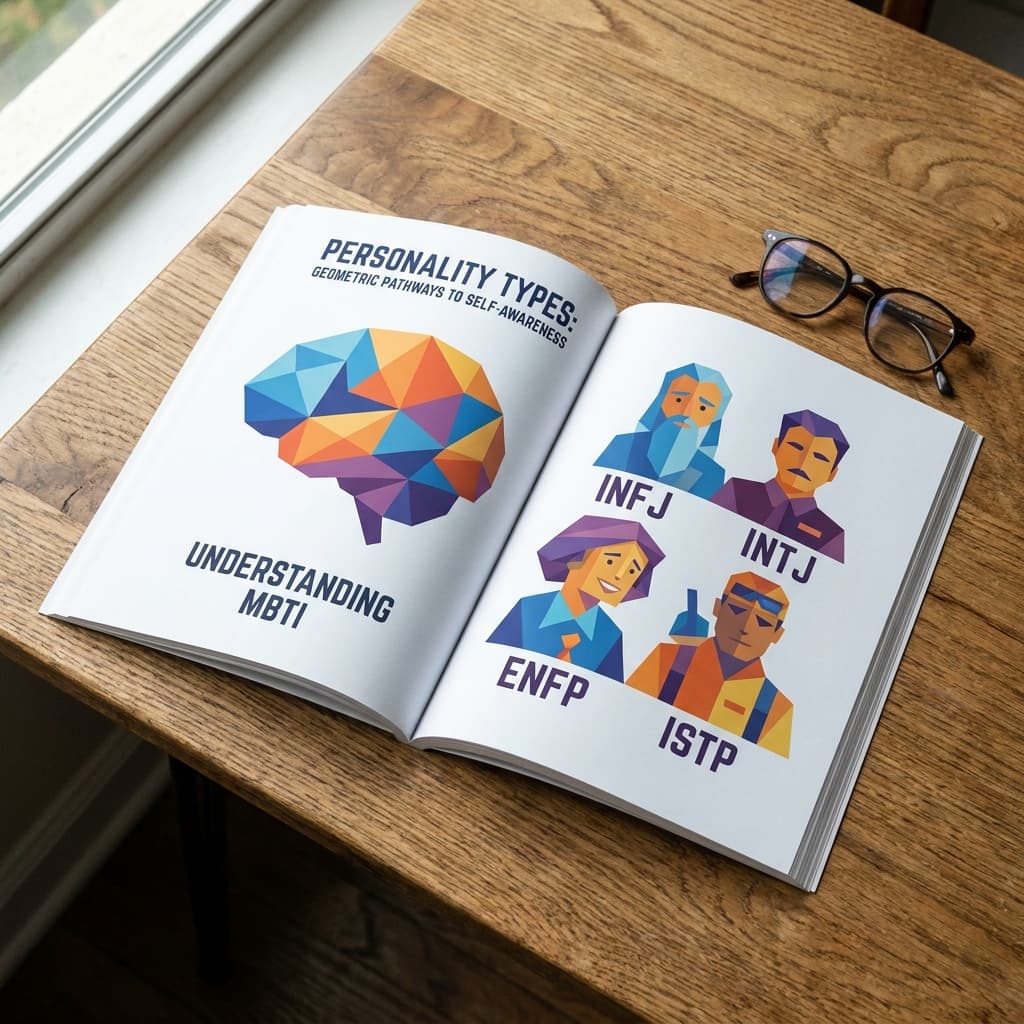
MBTI Personality Type Books for Personal Growth and Self-Awareness
Finding the right mbti personality type books for personal growth helps you map out your natural strengths and blind spots. These guides act as mirrors, showing you why you react to stress or social situations in specific ways.
Whether you're an INFJ feeling isolated or an INTJ hitting a wall, understanding your cognitive functions makes life feel less like a guessing game. It's about using psychology to build better habits that actually fit your brain.
You will learn which books help with self-awareness, how to handle burnout, and ways to better understand the people around you.
Table of Contents
- What to Read When Feeling Misunderstood as an INFJ
- How to Improve Self-Awareness Using Personality Type Books
- Best Books for Understanding Different MBTI Types
- Best Books for INTJ Personal Growth and Challenges
- The Science Side: Linking Brains to Personalities
- Frequently Asked Questions
- Conclusion
What to Read When Feeling Misunderstood as an INFJ
Why do INFJs feel so isolated? It usually comes down to a world that values loud, fast responses over deep, quiet reflection. When you are an INFJ, you might feel like you are speaking a different language than everyone else. Finding the right books bridges that gap by proving your traits are actually common and valuable.
Take someone like Sarah, who feels exhausted after a simple office lunch. She thinks she is failing at being normal because she needs to hide in a quiet corner just to breathe. But when she reads Best Books For Understanding Introverted Personality Types And Growth, she finds out about the term 'Highly Sensitive Person,' coined by Dr. Elaine Aron in 1997. Suddenly, she isn't broken - she just has a nervous system that picks up more detail than the average person.
Susan Cain’s book 'Quiet', released in 2012, is another essential read for those who feel misunderstood. It explores how to use quiet strengths in a collaborative office setting. Instead of trying to be the loudest person in the room, an INFJ can focus on their ability to see the big picture that others miss. You can explore similar titles in our guide on Personality Types Books Like Quiet For Understanding Introverts.
Dario Nardi also provides a physical basis for these feelings in his 2011 work, 'Neuroscience of Personality'. He uses brain-savvy insights to show that personality types actually use different brain regions. Knowing there is a scientific reason for your sensitivity can help you stop fighting your nature and start working with it.
Key insights:
- Read 'The Highly Sensitive Person' to reframe sensitivity as a biological trait rather than a flaw.
- Schedule 'recovery niches' throughout the day to recharge your social battery.
- Use quiet strengths, like deep listening, to synthesize group ideas during meetings.
- Look for scientific validation in books like 'Neuroscience of Personality' to quiet your inner critic.
The Power of Introversion in a Loud World
Introverts often feel like they are swimming against the tide in a culture that values constant talk. Susan Cain’s 2012 book Quiet shows that a preference for solitude is a different way of processing information rather than a weakness. Once you accept this, you can stop trying to mimic extroverts and start trusting your own unique insights.
Take a collaborative office where the fastest talkers usually lead every conversation. You might feel invisible in the moment, but your strength is your ability to synthesize complex information. For example, a thoughtful follow-up email that connects three separate ideas demonstrates a level of leadership that loud shouting matches simply cannot match.
Key insights:
- Schedule recovery niches between intense social blocks to keep your social battery from hitting zero.
- Practice deep listening to identify the core problems that others might overlook in the heat of a meeting.
- Look at how the best books for introverts and myers briggs types help you thrive to find more ways to use your type as a strength.
How to Improve Self-Awareness Using Personality Type Books
Reading the right book does more than just give you facts; it provides a new lens for looking at your own behavior. When you understand your personality type, you stop judging yourself for not being like everyone else and start looking for what actually works. James Clear’s Atomic Habits is a great example of this. By applying his 2018 insights on small wins to your specific MBTI profile, you can build routines that respect your natural energy instead of draining it.
Think about a person who constantly hits a wall with their personal productivity. They try to follow every trendy hustle tip they find online, yet they end up burnt out and frustrated every single month. Once they realize their personality type thrives on deep focus rather than rapid multitasking, they can stop trying to force a square peg into a round hole. They might use books like Atomic Habits for consistency and growth to design a schedule that honors their need for quiet, uninterrupted time.
This shift in self-perception is often backed by hard data. For instance, Dario Nardi’s 2011 book Neuroscience of Personality shows that different types literally use different parts of their brains. When you see the physical evidence for why you think the way you do, it becomes much easier to forgive your perceived flaws. You aren't lazy or disorganized; you might just be wired for a different kind of rhythm.
Key insights:
- Pair Atomic Habits with your MBTI results to create routines that match your natural energy peaks throughout the day.
- Look for the physical basis of your behavior in neuroscience books to stop the cycle of self-criticism.
- Identify your natural energy slumps and schedule low-effort tasks during those times to avoid hitting a wall.
- Use personality-specific habits like journaling to track how different routines affect your mood and stress levels over time.
Best Books for Understanding Different MBTI Types
Understanding why someone reacts differently than you do is the first step toward better relationships. Books on personality types act like a decoder ring for human behavior, helping you see that a coworker's bluntness might just be their way of being efficient. When you read about the 16 types, you start to realize that there isn't a single right way to process information, just different ways of viewing the world.
Imagine a manager named Sarah who is struggling to motivate her team. Half her staff wants detailed spreadsheets and clear deadlines, while the other half gets inspired by big-picture brainstorming and flexible schedules. By picking up a book like Life Types by Sandra Krebs Hirsh and Jean Kummerow, Sarah can quickly see that her team isn't being difficult on purpose. John Hackston from OPP calls it a very easy book to dip into for insight into the fascinating world of different people.
If you want a more data-driven approach, the third edition of the MBTI Manual published in 1998 offers technical tables for those who like hard evidence. This is especially helpful if you are trying to apply these ideas in a professional or multicultural setting. It helps bridge the gap between feeling like you understand someone and actually having the data to prove why their perspective is valid. This shift in perspective is a core part of how the best books for introverts and Myers Briggs types help you thrive in daily life.
To really understand these differences, you have to look at where it all started with Isabel Briggs Myers. She wrote Gifts Differing to show that our flaws are often just our natural strengths being used in the wrong context. Her work changed how we view personality by proving that type isn't about boxes but about preferences. As Claire Bremner noted, reading this book is like hitting an 'Ah! Now I get it!' button for why people act the way they do.
For example, you might get frustrated because your partner seems cold or overly logical during an argument. Instead of seeing it as a lack of emotion, Gifts Differing helps you realize they are simply using a different cognitive process to solve the problem. They aren't trying to be hurtful; they are just prioritizing logic to find a solution. Understanding this allows you to find purpose and direction in your closest relationships by meeting them where they are.
Identifying the dominant function of the people you interact with most is a game changer. If you know your spouse leads with intuition while you lead with sensing, you can stop arguing about the details of the grocery list and focus on the big picture of your weekend plans. This simple shift reduces friction and builds a much stronger foundation for long-term communication. It turns every interaction into an opportunity for growth rather than a source of stress.
Key insights:
- Keep a copy of Life Types as a quick-reference guide for decoding communication styles in the office.
- Identify the dominant function of people you interact with most to reduce daily friction.
- Read Susan Cain's book Quiet from 2012 to understand the specific value introverts bring to a group setting.
- Look for the inferior function in others during high-stress moments to offer more effective support.
- Use the MBTI Manual data if you need scientific validation to convince skeptics on your team.
Gifts Differing and the Roots of Type
Getting to the bottom of why we act the way we do leads back to Isabel Briggs Myers. Her book, Gifts Differing, acts like a secret decoder ring for human behavior by showing that our natural preferences are tools rather than flaws. While the third edition of the MBTI Manual from 1998 provides the heavy duty data for professionals, the core message is for everyone. It teaches us that people aren't being difficult on purpose; they are just using a different mental process.
Think about a friend who brings a spreadsheet to a feelings conversation. It is easy to think they are being cold, but they are likely just leading with a thinking function. Once you see it as a different cognitive language, the frustration melts away. This is why exploring the best books for understanding introverted personality types and growth can be such a relief when you feel out of sync with those around you.
Key insights:
- Spot the dominant function of people you see daily to cut down on social friction.
- Read Gifts Differing to start seeing your own habits as cognitive strengths.
- Use MBTI Manual data to help skeptics understand the science behind personality types.
Best Books for INTJ Personal Growth and Challenges

Finding the best books for INTJ personal growth and challenges often means looking for works that explain why logic fails during high-pressure moments. INTJs usually pride themselves on long-term planning, but stress can flip that script entirely. This happens when you fall into the stress grip, a state where your least developed trait - the inferior function - takes the wheel and clouds your judgment.
Take a software engineer who is usually focused on high-level system architecture. Under a massive project delay, they might suddenly stop coding to spend three hours obsessively organizing their desk or snapping at coworkers over minor typos. They have lost their big picture perspective and are now stuck in a loop of impulsive, detail-oriented behavior that feels alien and frustrating to their usual way of thinking.
To fix this, you have to look at the science behind the shift. Dario Nardi’s 2011 book on the Neuroscience of Personality explains how different types use specific brain regions, which helps an INTJ see burnout as a technical issue to be solved. You might also find it useful to check out how the best books for introverts and myers briggs types help you thrive to build a lifestyle that prevents these grip episodes before they start.
Key insights:
- Study Naomi Quenk’s work on the inferior function to understand why you become uncharacteristically impulsive under pressure.
- Watch for early warning signs like an unusual obsession with minor details or a sudden urge to overindulge in sensory experiences.
- Build tiny, repeatable habits using the framework from books like Atomic Habits for consistency and growth to stay grounded.
- Review the MBTI Manual data if you need technical tables and scientific validation to convince your logical mind that personality theory is a valid tool for growth.
The Science Side: Linking Brains to Personalities
Yes, there is a real physical basis for why we act the way we do. It is not just about your mood or how you were raised. Brain science now shows that different personality types rely on specific regions of the brain more than others. This means your type is essentially a map of your most active neural pathways.
For a long time, critics argued that personality tests were too subjective. But recent years have brought a trend toward the scientific validation of type. This is why many people now use personality types books like Quiet for understanding introverts to understand the biological reality of being an introvert. It also explains why Dr. Elaine Aron’s 1997 book on being a Highly Sensitive Person resonates with so many.
Imagine a skeptic who wants data-driven proof before they invest any time in personality theory. They might be an analyst who thinks MBTI is just a fun parlor game. Once they see the experimental data from Dario Nardi showing how different types use different brain regions, the theory becomes a tool they can actually trust. It is hard to argue with a brain scan that shows your mind is literally wired to process information in a unique way.
Key insights:
- Explore Neuroscience of Personality by Dario Nardi to see the brain-savvy insights and EEG data behind your type.
- Look for technical tables in the MBTI Manual if you need hard data on how types function in multicultural settings.
- Use how book insights and the best books for finding purpose and direction change lives to turn this scientific data into a personal growth plan.
- Study the Highly Sensitive Person research to understand the biological foundations of sensitivity as a strength rather than a flaw.
Frequently Asked Questions
It definitely can, but it usually starts with a shift in how you see yourself rather than a total personality overhaul. When you read something that clicks, it is like hitting a light switch that helps you finally understand why you act a certain way in specific situations. Here is the thing: you are not trying to become a different person, but you are learning how to use your natural traits better.
For example, if you often feel stuck, a book like James Clear's bestseller is great because it focuses on tiny, manageable changes. Instead of trying to change your core self, you are just tweaking your habits to fit your personality. It is really about working with your brain instead of fighting it every day.
INFJs are often very empathetic, and that can be pretty exhausting in a loud or busy world. Since the term Highly Sensitive Person was first used back in 1997, many INFJs have realized they are not actually broken or weird. They are just naturally wired to take in more information from their surroundings than other people.
Reading about high sensitivity helps you stop apologizing for needing quiet time. Instead of feeling misunderstood, you start to see your deep empathy as a strength. It is a huge relief to realize there is a real explanation for why you feel so much, and it makes it way easier to build a life that actually feels good to you.
If you are just starting out, Gifts Differing is the absolute classic. It was written by Isabel Briggs Myers and it is the book that makes most people have that big 'aha' moment. It explains how different types see the world and why we all act so differently in such a clear and friendly way.
For something even easier to browse, you might like Life Types. It is a very easy book to dip into if you want quick insights into how your friends and family think. It is perfect for getting the basics down without feeling like you are back in a classroom.
Stress has a funny way of making you act like a completely different person. This usually happens because your 'inferior function' takes over when you are pushed too far. This is the least developed part of your personality, so it can feel a bit messy when it starts calling the shots.
Expert Naomi Quenk wrote about this to help people realize they are not actually losing their minds. Her research on the inferior function shows that these reactions are a normal part of your personality type. Knowing this helps you be a bit kinder to yourself when you are having a rough day.
Conclusion
Understanding your personality is about way more than just finding a label that fits. It is about getting a better look at the parts of yourself that usually stay in the shadows. Whether you are an INFJ looking for a sense of belonging or an INTJ trying to handle stress better, these books act as mirrors. They help you see your own blind spots while giving you a clear view of why the people around you think and act the way they do.
The real shift happens when you stop just reading and start applying these ideas to your daily life. Your next move might be picking up a book that focuses on your inferior function, which is basically the part of you that takes over when you are stressed out. Knowing how that works can help you spot burnout before it hits and keep your relationships much smoother.
Personal growth is not about trying to change your core self. It is about becoming the most aware and capable version of the person you already are. So, pick a book that speaks to you and start exploring. You might be surprised by how much more sense the world makes when you finally understand the way your own mind works.

Send it to someone who should read it next.
About the author

ScoreRead Editorial Team
Editorial Team
Every article on ScoreRead is researched, written, and edited by our editorial team before publishing, so the ideas we cover stay accurate, clear, and genuinely useful.
View all articles