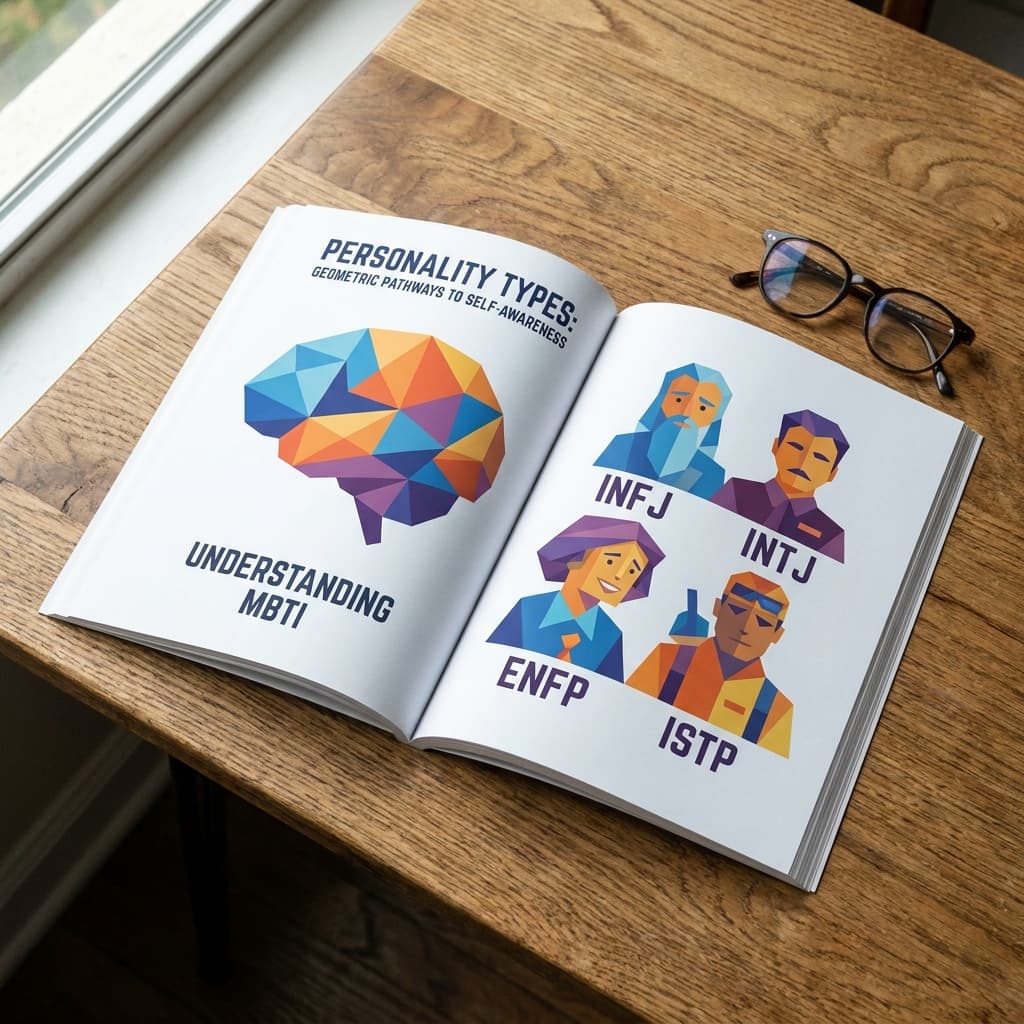
Best Books for Navigating INFJ Struggles and Growth
The most helpful Personality Types: best books for navigating INFJ struggles are those that offer psychological depth, such as Man’s Search for Meaning and Jane Eyre. These stories act as...

ScoreRead Editorial Team
Editorial Team
Best Books for Navigating INFJ Struggles and Growth
The most helpful Personality Types: best books for navigating INFJ struggles are those that offer psychological depth, such as Man’s Search for Meaning and Jane Eyre. These stories act as a mirror for your complex internal world and unique perspective.
Being an INFJ often feels like you’re an outsider looking in, so finding characters who share your 'deep heart' makes a huge difference.
This guide provides a curated list of reads to help you with identity, growth, and the common feeling of being misunderstood by others.
Table of Contents
- Why Do INFJs Feel So Misunderstood by Others?
- Best Books for Understanding My Personality Type Growth
- What to Read When Feeling Lost in Identity
- Books Like Mindset for Understanding Personality Types
- Practical Tips for Your Next Reading Journey
- Frequently Asked Questions
- Conclusion
Why Do INFJs Feel So Misunderstood by Others?
INFJs often feel like they are tuned into a frequency no one else can hear. This sense of isolation comes from a natural tendency to look past the surface of daily life to find deeper patterns and meanings. While others focus on what is happening right now, you are likely wondering why it is happening and what it means for the future. This deep heart can feel heavy, but it is also your greatest strength.
Imagine standing in a crowded room where everyone is laughing at a joke you find hollow. You aren't being snobbish. You just see the hidden sadness or the social performance behind the laughter. It feels like you are speaking a complex language of symbols and intuition while everyone else is sticking to the basics. This is why many INFJs feel a pensive reflection that others mistake for being cold or antisocial.
Finding yourself in classic characters can bridge this gap and reduce the sting of loneliness. Typologists like Susan Storm, a certified MBTI practitioner, suggest that many iconic authors share this specific internal world. For instance, Agatha Christie is widely considered an INFJ because of her uncanny ability to connect dots and gain deep insight into human nature through her mysteries. She saw the patterns in people that others missed.
Characters like Jane Eyre offer a perfect mirror for the INFJ's need for personal integrity. When Jane declares that she is a free human being with an independent will, she is choosing her own soul over social compliance. Seeing your own struggle for independence reflected in a classic character can help you feel less alone. It reminds you that your need for depth is shared by some of history's most resilient minds. This changes everything for a person who feels misunderstood.
Using stories as a way to understand humanity is a core part of your growth. You aren't just reading to escape. You are reading to find what is essential and invisible to the eye. Seeking out best books for understanding introverted personality types and growth can help you turn that pensive feeling into a path for self-discovery. You might even find that mbti personality type books for personal growth and self awareness provide the framework you need to finally feel seen.
Key insights:
- Read books that validate your deep heart instead of trying to fit into a shallow mold.
- Look for kindred spirit characters like Jane Eyre to reduce the feeling of being an outsider.
- Schedule quiet soul-care reading time with a cat on your lap to ground yourself in stories that matter.
- Study the lives of suspected INFJ authors to see how they used their intuition to connect with the world.
Finding Yourself in Classic Characters
Seeing yourself in a book is more than simple entertainment. It acts as a bridge between your internal world and reality. If you are searching for what to read when feeling misunderstood by others, finding characters who share your intuition can reduce the sting of loneliness.
Imagine you are at a crossroads where everyone expects you to follow the crowd. You turn to a classic story and see a character choose their soul over social safety. This reflection gives you permission to trust your independent will when the world feels too loud.
Typologists often identify authors like Agatha Christie as kindred spirits because of how they used their intuition to connect dots others missed. Their stories prove that choosing integrity over social compliance is a strength. This realization helps you find the best books for understanding introverted personality types and growth, allowing you to finally feel seen.
Key insights:
- Look for kindred spirit characters to reduce the feeling of being an outsider.
- Map literary insights to your real-life struggles to see how classic characters handled similar pressures.
- Pick stories that explore self-discovery when feeling lost to ground your identity.
Best Books for Understanding My Personality Type Growth
Books act as a roadmap for your personal evolution, moving you from a state of survival to a state of thriving by offering new ways to view your internal struggles. Finding the right words for your experiences gives you the power to change how you interact with the world. This makes them the best books for understanding my personality type growth because they turn abstract feelings into concrete steps.
Imagine you are feeling stuck in a loop of overthinking and self-doubt. You decide to read Man's Search for Meaning by Viktor Frankl, which has sold over 10 million copies worldwide. As you learn about Logotherapy, you realize that even in the middle of pain, you have the freedom to choose your own attitude. This shift helps you stop seeing your personality as a list of flaws and start seeing it as a unique tool for creating a meaningful life.
You can also find personality types books like thinking fast and slow for growth that explain the mechanics of how you think. If you are looking for what to read when feeling misunderstood by others, authors like Susan Storm offer practical ways to apply these concepts to your daily routine. This is essential for mbti personality type books for personal growth and self awareness.
Key insights:
- Start a Growth Journal to map specific quotes or character choices to your own real-life personality struggles.
- Pair a technical book on cognitive functions with a deep novel like The Stand to see how personality theory plays out in fiction.
- Grab a purring cat and a blanket to create a cozy, safe space for deep reading and reflection.
What to Read When Feeling Lost in Identity
When you feel like you have lost your true north, stories act as a mirror to reflect your core values back to you. They provide a safe space to explore different versions of yourself without the pressure of the outside world. This is especially true for INFJs who view reading as a way to understand humanity rather than just escaping it. This process of finding yourself in the pages of a book helps you rebuild a foundation that feels solid and true.
Imagine you are feeling completely overwhelmed by what everyone else expects of you. You pick up a copy of The Little Prince and read that it is only with the heart that one can see rightly. Suddenly, the noise of the world fades away. You remember that the most essential parts of who you are cannot be seen by others, but they are the parts that matter most.
Dystopian stories also offer a unique way to explore identity by showing us what happens when it is stripped away. Aldous Huxley wrote Brave New World back in 1931, and its themes of clones and conformity still hit home today. For an INFJ, the struggle for individuality in that story mirrors the daily fight against societal pressure and the need to fit into a shallow mold.
By using these warnings to identify your own non-negotiable values, you create a shield against the noise. This is why many people believe Agatha Christie was an INFJ herself. She used her ability to connect dots and see into human nature to create complex puzzles that reflect the human condition. When you look for what to read for self discovery when feeling lost and seeking clarity, you are following in the footsteps of those who used intuition to map the human soul.
Even when the books feel heavy, they serve a purpose. INFJs often feel a sense of pensive reflection or great sadness because they care so deeply. It is a sign of a large intelligence and a deep heart. Embracing these stories helps you realize that your intensity is a strength, not a flaw to be fixed.
Finding best books for understanding introverted personality types and growth is about more than just checking off a list. It is about finding the stories that make you feel seen. When you see your own inner battles played out on the page, the world feels a little less overwhelming and your path becomes a little clearer.
To make the most of this, create a space that feels safe and grounded. Grab a purring cat and a warm blanket to settle in for some dedicated soul-care reading time. This physical comfort helps you stay present while your mind explores the deep allegories and psychological layers of the book. It turns a simple reading session into a powerful way to reclaim your sense of self.
Key insights:
- Schedule soul-care reading time with a cat on your lap to ground yourself in the moment.
- Use dystopian stories to identify your own non-negotiable values and beliefs.
- Look for stories that validate your need for depth rather than trying to fit into a shallow mold.
- Write down one core value you see in a character that you want to reclaim for yourself.
The Power of Dystopian Warnings
Dystopian fiction is more than a bleak forecast of the future. For the INFJ, these stories act as a mirror for the internal struggle to remain authentic in a world that demands conformity. Since Aldous Huxley wrote Brave New World in 1931, readers have used his vision to explore the friction between personal identity and societal pressure.
Imagine living in a world of clones where everyone is forced into a specific mold. This scenario reflects the daily pressure many INFJs feel to hide their deep heart just to fit into a shallow environment. These stories offer a safe space to explore best books for understanding introverted personality types and growth while validating your need for a unique identity.
Key insights:
- Read dystopian novels to pinpoint which societal pressures make you most uncomfortable.
- Identify one character whose integrity inspires you and note how they protected their values.
- Use these allegories as a tool for what to read for self discovery when feeling lost and seeking clarity.
Books Like Mindset for Understanding Personality Types

If you loved Carol Dweck’s work on growth, you likely want a practical roadmap for personal change. While most growth books focus on the power of belief, personality-specific guides explain the mechanics of why you act the way you do. They bridge the gap between wanting to improve and knowing exactly where to focus your energy based on your unique mental wiring.
Experts like Susan Storm, a certified coach with over 1,000 articles on typology, offer the specific framework needed for this. Instead of generic advice, these resources provide mbti personality type books for personal growth and self awareness that target your internal functions. This approach turns self-improvement into a personalized strategy that actually sticks because it respects your natural temperament.
Imagine you are an INFJ who feels stuck in a loop of overthinking. You have read general self-help, but it feels like it is written for someone else. Then you pick up Viktor Frankl’s "Man’s Search for Meaning," a book that has sold more than 10 million copies. As you learn about Logotherapy, you realize that your primary drive is finding meaning rather than just seeking pleasure. You stop trying to fix your deep heart and start using it as a tool for personality types books like thinking fast and slow for growth.
Key insights:
- Explore the work of Susan Storm to understand the specific mechanics of your mind and how your type develops over time.
- Read Viktor Frankl to practice choosing your own attitude in any set of circumstances, even the difficult ones.
- Check out compare and apply decision making books best reads for procrastination and mindset growth to see how your personality influences your daily choices.
- Apply Logotherapy by looking for the underlying purpose in your current struggles instead of just trying to escape them.
Practical Tips for Your Next Reading Journey
How do you handle a massive reading list without feeling like you are drowning? For an INFJ, the pressure to find deep meaning in every page can turn a hobby into a heavy weight. Start by giving yourself permission to focus on just two paths at once. You do not need to finish every book. If a story does not click with your heart, it is okay to put it down.
Reading is about understanding humanity rather than just checking boxes. Even Agatha Christie, who many typologists believe was an INFJ herself, used stories to connect dots and gain insight into human nature. She focused on the why behind people, which is more important than just finishing a list.
Picture an INFJ sitting on the floor surrounded by 20 different books. They have 'Brave New World' by Aldous Huxley, written in 1931, in one hand and a stack of personality guides in the other. They feel stuck because they want the societal analysis of a classic novel but also crave the practical frameworks found in Mbti Personality Type Books For Personal Growth And Self Awareness. Instead of picking one, they spend an hour worrying about which one will help them grow the most.
This is where the 'one of each' rule helps. Pairing a non-fiction growth book with a fictional story satisfies both your logical and emotional sides. This prevents your brain from getting tired of one style and stops the freeze of analysis paralysis.
Key insights:
- Pick one fiction and one non-fiction book to read concurrently to balance logic and emotion.
- Set a timer for fifteen minutes to break the initial freeze of analysis paralysis.
- Try What To Read For Self Discovery When Feeling Lost And Seeking Clarity if you are stuck on which genre to start.
- Put the rest of your 20-book stack out of sight to reduce visual stress and clutter.
- When overwhelmed, remember that reading is soul care and not a chore to be completed.
Frequently Asked Questions
If you just found out you're an INFJ, you should probably start with Man's Search for Meaning by Viktor Frankl. It is a powerful look at how we find purpose even in the darkest times. Since it has sold more than 10 million copies, it clearly resonates with people all over the world who are looking for deeper meaning in their lives.
You might also enjoy something like Jane Eyre. It is a great pick because it highlights the importance of keeping your integrity and independent will, even when things get difficult. It is the kind of story that helps you feel seen while you are still figuring out your own personality growth.
It often comes down to the fact that INFJs view reading as a way to understand the human condition rather than just a way to escape reality. You likely look for stories that ask tough questions about life and psychology because you have a deep heart that naturally gravitates toward reflection. It is really about finding a connection to the struggle of being human.
Many INFJs also love dystopian stories like Brave New World because they explore what happens when we lose our individuality. These books help you feel less alone in your thoughts. Even authors like Agatha Christie, who many believe was an INFJ herself, used her stories to gain deep insight into human nature, which is exactly what pensive readers are looking for.
You can use stories as a mirror for your own life. Instead of just reading for fun, look for characters who ask the same big questions you do. It is about finding a reflection of your inner world in the pages of a book.
Here's the thing. Many people with the INFJ type find that they don't just read to escape reality. They read to understand it. When you see a character like Jane Eyre asserting her independence, it helps you realize your own need for integrity. Seeing that on the page can help you name feelings you didn't have words for before.
Several famous writers are often linked to the INFJ personality. For example, Agatha Christie is considered an INFJ by many experts because of her talent for seeing patterns and understanding why people do what they do.
You also see INFJ traits in the way authors like Stephen King describe their work. He's mentioned that stories often come to him as whole pieces from his unconscious mind. This matches the way INFJs tend to process information. Other writers like Aldous Huxley also explored the deep themes that resonate with this type.
Conclusion
So what does all this mean for anyone looking for the best books for understanding my personality type growth? It shows that your identity is not a puzzle to fix but a story to explore. When you search for what to read when feeling misunderstood by others, you see a common thread that stretches from classic novels to modern psychology. These stories prove you are not alone in your deep thoughts or your need for a real purpose.
Finding what to read when feeling lost in identity helps you realize that your complexity is a secret power. Whether you want books like mindset for understanding personality types or a deep look at the meaning of life, the goal is the same. You want to find a reflection of yourself that feels honest. You are moving from just getting by to using your sensitivity as a guide for your life.
Your next move is easy. Pick one book that speaks to your heart and one that explains how your brain works, then find a quiet corner with your favorite cat and start reading. Your personality is a big world, so do not be afraid to explore it. The right book is waiting to show you that your unique view is exactly what the world needs.

Send it to someone who should read it next.
About the author

ScoreRead Editorial Team
Editorial Team
Every article on ScoreRead is researched, written, and edited by our editorial team before publishing, so the ideas we cover stay accurate, clear, and genuinely useful.
View all articles