The Great Productivity Showdown: Choosing the Right Framework for Your Life
Ever feel like you are collecting productivity books instead of actually getting things done? It is frustrating to buy a bestseller only to find that the 1% better rule feels...

ScoreRead Editorial Team
Editorial Team

The Great Productivity Showdown: Choosing the Right Framework for Your Life
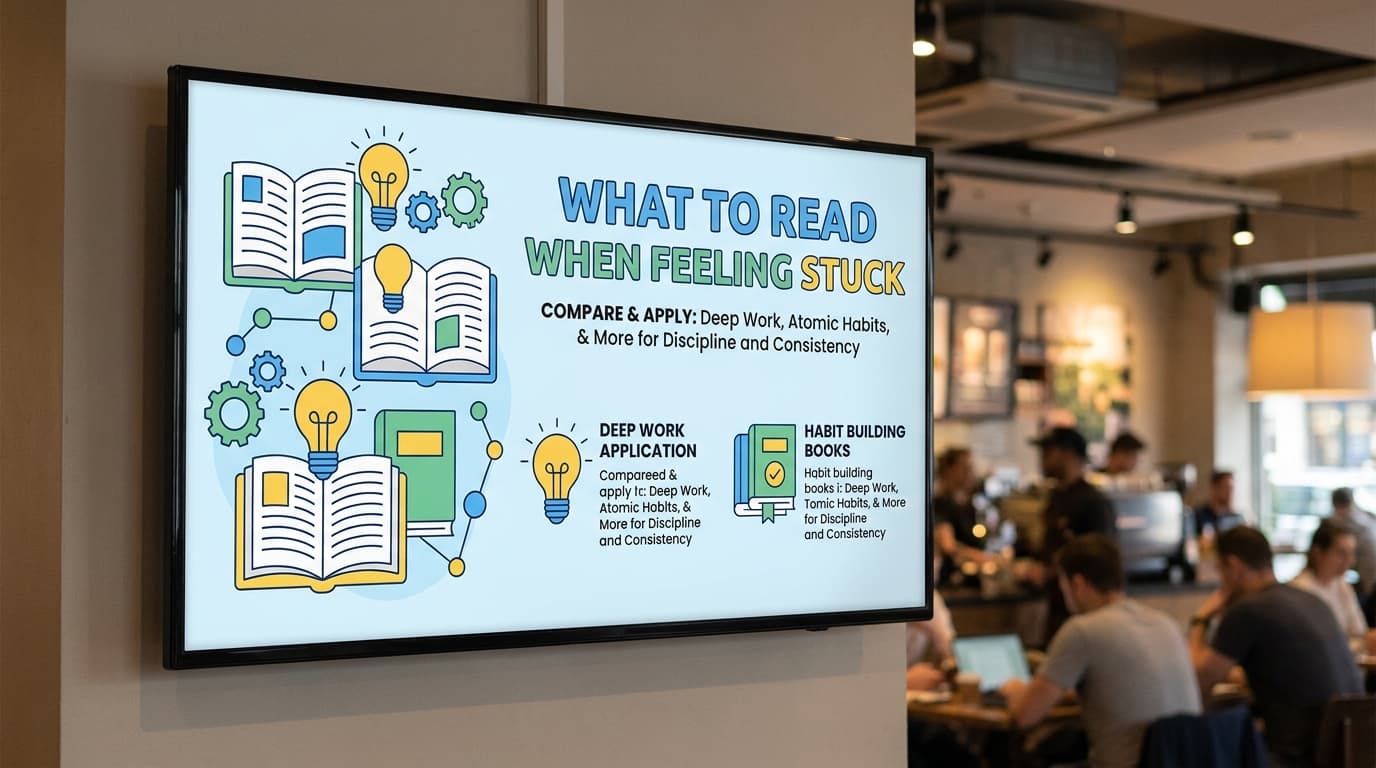
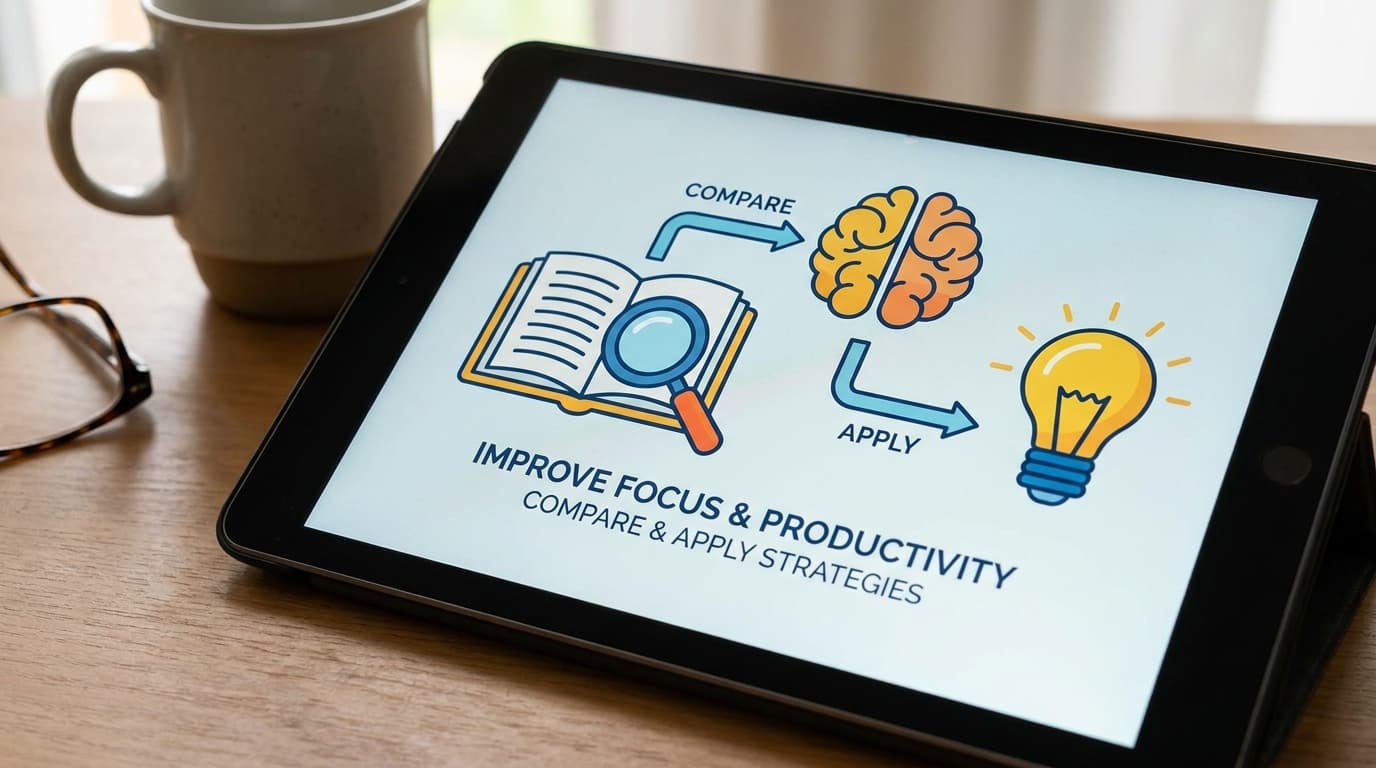
Ever feel like you are collecting productivity books instead of actually getting things done? It is frustrating to buy a bestseller only to find that the 1% better rule feels like a chore or that your schedule is too messy for a strict routine. The truth is that most advice fails because it is built for someone else's brain, not yours. To fix this, you have to Compare & Apply: Atomic Habits vs Tiny Habits for building consistency or look at Deep Work vs Flow State for intense focus to see what actually fits your daily rhythm.
This guide digs into the biggest frameworks to help you find your perfect match. We look at Essentialism vs The One Thing for productivity frameworks and even dive into mindset shifts like The Subtle Art vs Mans Search for Meaning for perspective. If you have ever struggled with office politics or personal growth, comparing Ego is the Enemy vs Radical Candor for self awareness might be the missing piece of your puzzle.
We are going to break down the science and the systems so you can stop scrolling and start doing. You will learn why identity matters more than goals and how to pick the one lead domino that makes everything else easier. Let's find the system that finally sticks.
Why Most Self-Help Advice Fails (and How to Pick What Actually Works)
Ever felt like you’re trying to herd cats while following a new productivity plan? You start with high hopes for that 1% better philosophy, but then progress stalls and frustration kicks in. This happens because most advice focuses on the wrong things. James Clear’s Atomic Habits became a massive hit because it simplified complex science for a wider audience. He famously notes that habits are just the compound interest of self-improvement.
But here’s the reality. Choosing the wrong framework is why we fail. Think of it like training a kitten. You can't just wish for it to happen. You need the right setup. While Clear focuses on systems over goals, BJ Fogg’s Tiny Habits argues that willpower is a myth. Success isn't about trying harder. It is about picking the system that fits your identity. Whether you choose a 277-page guide or a 310-page manual, the best tool is the one that actually works for your life.
Key insights:
- Systems beat goals because they focus on daily progress instead of a single finish line.
- Identity-based habits work by changing who you think you are, not just what you do.
- Simpler frameworks are easier to follow when life gets messy or unpredictable.
Small Wins vs. Micro-Steps: Atomic Habits vs. Tiny Habits
Why does one book on habits seem to be everywhere while another, equally smart one, stays in the background? James Clear released Atomic Habits in late 2018, and it quickly became a juggernaut, backed by an email list of over a million people. With an Amazon rating of 4.7 out of 5, it clearly resonates with people. But BJ Fogg’s Tiny Habits, which arrived on the last day of 2019, is often seen as the more scientific choice. While Clear focuses on broad systems, Fogg looks at the specific design of the behavior. Deciding between them depends on whether you want to change who you are or just fix your daily prompts.
Clear’s genius lies in making the complex feel easy. He describes habits as the compound interest of improvement. By writing at a 7th-grade level, he made behavioral science accessible to everyone, not just academics. His big move is the identity shift. Instead of focusing on the outcome, like losing weight, you focus on the person you want to become. You aren't just trying to run; you are becoming a runner. This matters because when a habit is part of your identity, it survives long after the initial motivation fades. It is about who you are, not just what you do.
On the other hand, BJ Fogg argues that willpower is a myth and bad habits are just design flaws. His B = MAP model is simple: behavior happens when motivation, ability, and a prompt converge. The trick is planting the behavior in the right spot. Think of it like this: if you want a new habit, anchor it to something you already do. Fogg’s 310-page guide shows that if you make a task small enough and trigger it correctly, it will grow without any coaxing. It is less about trying harder and more about designing smarter. Who knew science could be this practical?
Key insights:
- Systems are more effective than goals for long-term progress because they focus on the daily process.
- True behavioral change is rooted in identity transformation rather than just outcome-based targets.
- The B = MAP model proves that habits happen when motivation, ability, and a prompt hit at the same time.
- Simplicity in writing and frameworks often leads to higher mainstream adoption and success.
The Identity Shift: Why Who You Are Matters More Than What You Do
Most of us fail at our resolutions because we try to change our results instead of ourselves. Think about it: are you a runner, or are you just someone trying to run? James Clear took complex behavioral science and simplified it for the masses, writing at a 7th-grade level so the message actually sticks. This wasn't about making the ideas basic, but about making them useful for real life.
This identity-based approach is why Atomic Habits maintains a 4.7 rating on Amazon years after its release. By focusing on who you want to become rather than what you want to achieve, you build habits that last. As Clear puts it, goals are fine for setting a direction, but systems are what actually get you there. When you shift your identity, your behavior follows naturally.
Key insights:
- Identity-based habits focus on the type of person you wish to become, not just the outcome.
- James Clear's 7th-grade reading level approach made behavioral science accessible to millions.
- Systems are more effective than goals because they focus on daily progress rather than a distant finish line.
B = MAP: The Simple Logic Behind Tiny Habits
Ever feel like you are fighting your own brain just to start a new routine? BJ Fogg argues that willpower is actually a myth. He believes bad habits are not character flaws but design flaws in your daily environment.
His B = MAP framework simplifies the logic. Behavior happens when motivation, ability, and a prompt hit at the same time. While Atomic Habits is slightly shorter at 277 pages, Fogg’s 310-page book focuses on making things so easy you can't say no.
The secret is where you put the habit. Fogg says if you plant behavior in the right spot it grows without coaxing. Think of it like placing a treat right where your cat already naps. You aren't trying harder, you are just making the path easier for yourself to succeed.
Key insights:
- Willpower is less important than environmental design.
- Behavior requires the perfect timing of motivation, ability, and a prompt.
- Small changes grow naturally when placed in the right context.
Getting Into the Zone: Deep Work vs. Flow State
Ever feel like your brain is a browser with fifty tabs open? That constant buzzing makes it impossible to actually get anything done. We often talk about getting in the zone, but there are actually two different ways to get there. Cal Newport talks about Deep Work, which is all about structured discipline and carving out time with zero distractions. Then there is the Flow State, which feels more like a happy accident where you lose track of time because you are so into what you are doing. Both require you to protect your cognitive energy. This is where digital minimalism comes in. By stripping away the pings and notifications that fight for your attention, you give your brain the space it needs to actually dive deep.
One of the biggest hurdles to focus is what productivity experts call open loops. These are those tiny, unfinished tasks or ideas that loop in your head because you have not written them down or decided what to do with them. Your brain keeps reminding you about them, which eats up your mental bandwidth. To stop the buzz, you need to capture these tasks in an external system. Once your brain knows the information is safe somewhere else, it finally lets go. It is not just about working harder. It is about clearing the mental clutter so you can actually think.
Here is a secret: willpower is a myth. BJ Fogg argues that bad habits are due to design flaws, not character flaws. If you are struggling to focus, it is probably because your environment is working against you. Instead of trying to force yourself to be disciplined, try designing your space for success. Fogg says that if you plant a behavior in the right spot, it grows without you having to coax it. This means scheduling your deep work sessions when you have the most energy and making sure your phone is in another room. You do not need more grit. You just need a better plan. By setting a specific time for intense focus, you avoid burnout and make progress a part of your daily system.
Key insights:
- Deep work is a choice you schedule, while flow is a state you fall into.
- Closing open loops by writing tasks down frees up immediate cognitive energy.
- Environment design is more effective for maintaining focus than raw willpower.
The Truth About Focused Focus
Why do we keep failing at focus? We usually blame a lack of willpower, but BJ Fogg argues that is just a myth. Bad habits are not character flaws; they are actually design flaws in your environment. As Fogg puts it, if you plant a behavior in the right spot, it grows without any coaxing. This means your physical workspace matters more than your mental strength.
James Clear, who built an email list of a million people before Atomic Habits even launched, believes systems beat goals every time. While goals set your direction, your environment drives your daily progress. It is about making the right choices easy rather than forcing them to happen through sheer grit.
To stay productive without burning out, stop trying to track every task in your head. These open loops drain your mental energy fast. Instead, use an external system to capture ideas and focus on identity. When you shift how you see yourself, focus follows naturally because you are just acting like the person you have become.
Key insights:
- Environment design is more effective than relying on willpower for focus.
- Systems facilitate long-term progress better than outcome-based goals.
- Identity-based habits help sustain consistency by changing your self-perception.
Finding Your 'Why': The Subtle Art vs. Man's Search for Meaning
Why are you doing any of this? If you ever felt like your daily grind is just empty tasks, you are caught between two worlds. One side is modern cynicism and the idea that we should only care about a few things. On the other side is Viktor Frankl, who found meaning even in a nightmare. It is a sharp contrast. One tells you to stop caring about fluff like a cat ignoring a cheap toy while the other proves that having a deep reason to exist can keep you alive.
James Clear built an audience of over a million people because he understood that systems beat goals. His book holds a 4.7/5 rating on Amazon because it makes these complex ideas simple. He says habits are the compound interest of improvement. But those systems only work if they are tied to your identity. When you decide who you want to be, you stop wasting energy on things that do not fit. The work also needs to matter.
Moving from a place of not caring to finding deep purpose is just about focus. Manson helps clear the clutter of social pressure, while Frankl gives you the foundation to build something that lasts. You do not need a world-changing goal right now. Sometimes, the most resilient thing you can do is decide that your growth matters more than noise. What are you willing to struggle for today? Even a cat knows to stay focused on what truly matters.
Key insights:
- Caring about fewer things allows you to focus your energy on what actually builds your identity.
- Systems are more effective than goals, but they require a strong personal 'why' to stay consistent.
- Resilience comes from choosing a meaningful struggle rather than trying to avoid all discomfort.
The Power of Less: Essentialism vs. The One Thing
Have you ever felt like you are sprinting on a treadmill? You are working hard, but you are not actually getting anywhere. This is the trap of doing too much. Greg McKeown argues for the disciplined pursuit of less, while Gary Keller focuses on the domino effect. Both frameworks suggest that success does not come from doing more things, but from doing the right things. The goal is to find your highest point of contribution. It is about moving away from a hundred half-starts and focusing on one small move that actually matters.
The reality is that our brains are not built to juggle dozens of open loops. In the Getting Things Done system, these loops are what cause stress. By identifying a single next action, you stop the mental noise. James Clear often says that systems beat goals every time. If you build a system around doing less, you will not need to rely on willpower. As BJ Fogg points out, willpower is a myth and bad habits are just design flaws in our daily routine. His model shows that behavior happens when motivation, ability, and a prompt all hit at the same time. When you simplify your focus, you are not just being lazy. You are being strategic.
So, how do you actually clear your plate? You start by finding your lead domino. In Gary Keller's world, this is the one thing that makes everything else easier or even irrelevant. If you knock that one down, the rest follow naturally. But here is the hard part. You have to say no. Being an Essentialist is not about being mean. It is about being honest about your limits. You cannot give your best to a project if you are distracted by five other good ideas. Saying no is how you protect your lead domino and keep your focus on what counts.
Think of this as identity-based behavior change. You are not just trying to finish a to-do list. You are becoming the kind of person who values deep focus over shallow busyness. As BJ Fogg says, if you plant behavior in the right spot it will grow without coaxing. What would happen if you stopped trying to do it all and just did the one thing that truly moved the needle? When you align your daily actions with who you want to be, the overwhelm starts to fade away.
Key insights:
- Systems are more effective than goals for long-term progress because they focus on the process rather than a binary outcome.
- The next action mindset reduces mental load by closing open loops in your brain.
- Saying no is a tool for focus, not a sign of being unhelpful.
- Behavior change is most successful when it is rooted in identity rather than just outcomes.
Choosing Your Lead Domino
Ever feel like your to-do list is like herding cats? Gary Keller suggests finding your lead domino. This is the one task that makes everything else easier or unnecessary. When you focus here, you stop reacting to every ping and start clearing your plate for the stuff that really matters.
Saying no can feel awkward, but it is the secret to real focus. Essentialism is not about being mean. It is about protecting your limited energy. James Clear, whose book Atomic Habits spans 277 pages, argues that systems beat goals for progress. By cutting out the noise, you build a routine that actually sticks.
Looking in the Mirror: Ego is the Enemy vs. Radical Candor
Ever wonder why some talented people just stop growing? It usually happens when their ego gets in the way. Ryan Holiday argues that ego is the enemy because it makes us unteachable. But even if you stay humble, you still need people who are willing to be brutally honest. This is where Radical Candor comes in. It is about finding that sweet spot where you care about people but still challenge them directly.
Internal humility is the engine, but external honesty is the steering wheel. This mirrors the shift from goals to systems. James Clear, who built an email list of over 1 million subscribers using these principles, suggests that systems are best for making progress. By building a feedback system, you move toward identity-based change. You become someone who values the truth over being right, which is much more effective than just setting a goal to be better.
Balancing these two isn't easy. It feels uncomfortable to hear you messed up, but the best systems rely on this friction. When you prioritize self-awareness, you stop seeing feedback as an attack and start seeing it as data. What does this look like for you? Maybe it is as simple as asking for an honest take and listening without getting defensive. Think of it like a cat: stay curious and alert, even when things get a bit jumpy. Growth happens when your internal quiet meets external noise.
Key insights:
- Self-awareness works best when it is backed by a system of external feedback.
- Identity-based change means valuing the truth more than your own comfort.
- Radical Candor requires a balance of personal care and direct challenge.
Common Questions About Building Better Systems
Think about your cat for a second. They do not have a five-year plan or a goal to catch the red laser dot; they simply have a system that involves finding the warmest sunbeam every single afternoon. We often fail at our own resolutions because we obsess over the finish line rather than the track we are running on. James Clear, who built an audience of over a million subscribers before his book even hit shelves, argues that habits are basically the compound interest of self-improvement. He makes a bold claim: goals are fine for setting a direction, but systems are what actually get you there. If you have ever felt like a failure because you did not hit a specific target, the problem likely was not your effort, but your design.
You might wonder which framework actually holds the secret to staying consistent. The market has some clear favorites. Atomic Habits, released in late 2018, sits at 277 pages with a stellar 4.7 rating on Amazon. Meanwhile, BJ Fogg’s Tiny Habits came out about a year later, offering 310 pages of insight with a 4.5 rating. Interestingly, Atomic Habits is written at a 7th-grade reading level. This simplicity makes it accessible to almost anyone, whereas older frameworks like The Habit Factor from 2010 lean into more philosophical territory. Sometimes, the best system is simply the one that is easiest to understand on a tired Tuesday morning.
One of the biggest hurdles we face is the belief that we just need more willpower to change. BJ Fogg calls this a total myth. He suggests that bad habits are usually due to design flaws rather than character flaws. His behavior model, known as B = MAP, explains that an action only happens when motivation, ability, and a prompt hit at the same time. Instead of trying to force a massive change, think about identity. Instead of saying you want to run a marathon, try telling yourself that you are a runner. When you plant a behavior in the right spot, it grows without you having to poke and prod it constantly.
So, how do you pick a path? If you like a structured four-step process, you might look at the P.A.R.R. methodology - plan, act, record, and reassess. If you feel overwhelmed by tasks floating in your head, capturing them in an external system is the first step to regaining focus. The real shift happening right now is moving away from binary win-loss goals toward a lifestyle of daily progress. It is about protecting your mental space from digital noise and focusing on who you want to become, one small win at a time. After all, if the system works, the results will take care of themselves.
Key insights:
- Systems are more effective than goals because they focus on the daily process rather than a distant finish line.
- True change starts with identity; focus on the type of person you want to become rather than the outcome you want to achieve.
- Willpower is often unreliable; successful habits rely on environmental design and the right prompts.
- Simpler frameworks tend to have higher adoption rates because they are easier to apply during stressful times.
Final Thoughts: Stop Reading, Start Doing
So, where do we go from here? You’ve seen how these frameworks stack up, but here is the truth: the best system isn’t the one with the highest rating or the most pages. It’s the one you actually use when nobody is watching. James Clear reminds us that habits are the compound interest of improvement, but that interest only builds if you make a start. Even a small one.
Think about it this way. You could spend all day debating whether a 277-page book like Atomic Habits is better than a 310-page guide like Tiny Habits, but that’s often just another way to procrastinate. Why not try a quick experiment instead? Pick just one rule from everything we've discussed - maybe it’s identity-based changes or environmental design - and test it out today.
The real win isn't finishing a book or memorizing a framework. It is about becoming the person who takes action. Start small, keep it simple, and let your new system do the heavy lifting for you.
Frequently Asked Questions
It really depends on what you need right now. If you want a big picture look at how habits shape who you are, go with Atomic Habits first. But if you feel stuck and just need a simple way to start a new routine today, Tiny Habits is probably your best bet.
James Clear’s book is a bit shorter and focuses on the idea that your systems are more important than your goals. BJ Fogg’s book is slightly longer and teaches you the science of making things so small they are impossible to fail. Both are great, but Atomic Habits is often easier to jump into because it is written in a very simple and direct way.
Here is the thing to remember: Atomic Habits is about the identity of the person you want to become, while Tiny Habits is about the specific mechanics of behavior. Many people find that reading Clear first gives them the motivation to use Fogg’s specific steps later on.
It is definitely possible, but you have to change how you think about it. You might not get four hours of quiet time in a busy office, but you can still find smaller windows to get things done. The trick is to stop trying to keep everything in your head and use a system to track your tasks instead.
When you have a busy job, your brain gets filled with what experts call open loops. These are just unfinished tasks that distract you. If you write them down and clear your head using a method like Getting Things Done, you can focus better even if you only have an hour. It also helps to remember that focus is a skill you build over time, just like a habit.
Sometimes you just have to work with what you have. Even thirty minutes of intense focus is better than a whole day of jumping between emails and meetings. It is all about protecting your time and being honest about what you can actually get done in a loud environment.
It really comes down to intent and how you feel about your choices. An Essentialist makes a deliberate decision to do less because they want to focus on what actually matters, while a procrastinator just puts things off because they feel overwhelmed or bored. If you are an Essentialist, you feel in control of your schedule. If you are procrastinating, you usually feel a sense of guilt about the work you are avoiding.
Think of it this way. An Essentialist says no to a meeting because it does not align with their big picture. A procrastinator says they will start their big project after they spend an hour checking email. One is a strategy and the other is a trap. It is okay to acknowledge the nuance here because sometimes we hide procrastination behind the label of being busy. If you are making progress on your most important thing, you are likely an Essentialist.
Most people fail because they focus on the result instead of the person they want to become. You might say you want to run a marathon, but you have not decided to be a runner yet. When you focus only on the goal, you often stop once you hit it or give up when the process gets hard. James Clear, who wrote Atomic Habits in 2018, explains that true change is about identity transformation.
Here is the thing that most people miss: habits are like the compound interest of self improvement. If you do not change the underlying system of who you are, you are just fighting against yourself every day. It is also about how you design your life. BJ Fogg, the author of Tiny Habits, says that bad habits are usually due to design flaws rather than character flaws. If your environment does not support your new identity, it is almost impossible to make the change stick long term. You have to plant the behavior in the right spot so it can grow without you having to force it.
Conclusion
So, where does this leave us? The truth is, there is no single champion in the productivity world. Comparing Atomic Habits vs Tiny Habits or looking at Deep Work vs Flow State shows that progress is deeply personal. Some days you might need the rigid systems of Essentialism, while other days require you to find your deeper purpose through Man’s Search for Meaning. It is all about building a personal toolkit that fits your actual life, not the one you think you should have.
The real shift happens when you stop trying to do everything and start focusing on what truly matters. Whether you are leaning into Radical Candor at the office or using The One Thing to clear your home schedule, the goal is always the same: less friction and more meaning. You do not need to be perfect or have a flawless routine. You just need to be intentional about where you spend your energy. Even if your only goal today is to finally organize that desk and keep the cat off your keyboard, clarity is key.
Your next move is simple: pick just one idea from this list and try it out right now. Maybe it is a tiny habit or a short block of focused work. Do not overthink it. The best system is always the one you actually use. So, put the books down, pick your lead domino, and get moving. You have got this.
Send it to someone who should read it next.
About the author

ScoreRead Editorial Team
Editorial Team
Every article on ScoreRead is researched, written, and edited by our editorial team before publishing, so the ideas we cover stay accurate, clear, and genuinely useful.
View all articles