Atomic Habits or Can’t Hurt Me? Finding a Discipline Style That Actually Sticks
In 2018, Karina Inkster read zero books. Just one year later, she finished 29. She didn't get more hours in the day or a magic brain boost. She just stopped...

ScoreRead Editorial Team
Editorial Team

Atomic Habits or Can’t Hurt Me? Finding a Discipline Style That Actually Sticks
In 2018, Karina Inkster read zero books. Just one year later, she finished 29. She didn't get more hours in the day or a magic brain boost. She just stopped relying on willpower and built better systems. If you've ever felt like your goals are slipping away while you're busy wrangling the cat, you aren't alone. Most of us struggle because we haven't found a routine that works for our specific life.
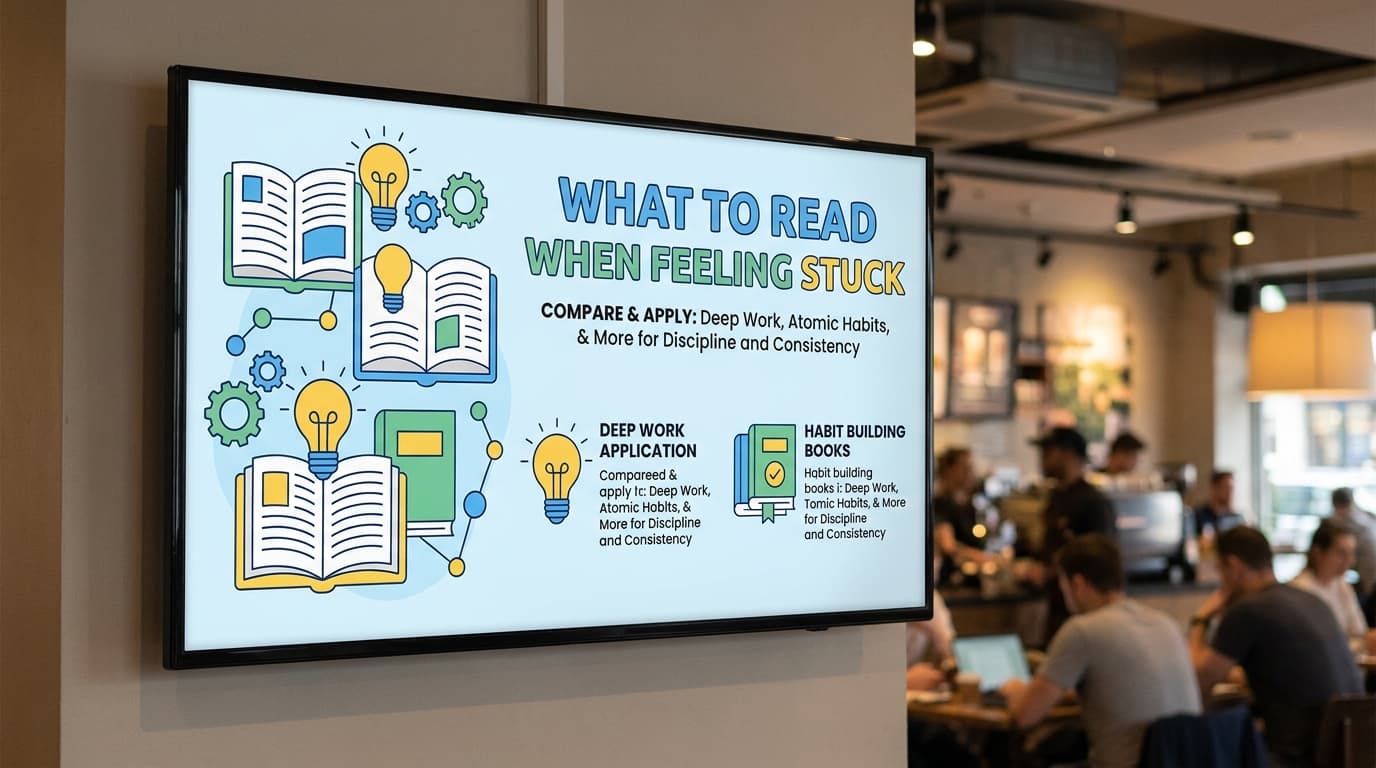
This guide looks at the big debate of Atomic Habits vs Can’t Hurt Me for discipline to help you see which style fits your personality. Should you use James Clear's tiny wins, or do you need David Goggins' raw grit? We also look at how to balance a busy household with digital focus and why your environment matters more than your motivation.
We'll look at how to choose between extreme ownership and simply not giving a f*ck, plus how to use Deep Work to protect your time. By the end, you'll have a system that actually sticks, even when life gets messy.
The Zero to 29 Books Secret: Why Your Systems Matter More Than Your Goals
How did Karina Inkster go from reading zero books in 2018 to finishing 29 in a single year? It wasn't because of a sudden burst of willpower or a fancy New Year’s resolution. The secret was moving away from big, scary goals and focusing on daily systems instead. Think of it like being a cat person. Cats don't set milestones for napping or hunting. Instead, they live within intentional, repeated patterns that serve their needs perfectly. When you build a system like that, you stop fighting yourself.
James Clear, the author of Atomic Habits, explains this perfectly. He says that you don't rise to the level of your goals, but rather fall to the level of your systems. If your plan for reading is just whenever I have time, you will probably end up scrolling through your phone instead. Karina changed her environment and her schedule, using a four-step process to make reading a friction-less part of her day. The data shows that habits form based on how often you do them, not just how much total time passes. Frequency is the real engine of change.
This shift is a game changer if you are trying to find a discipline style that actually sticks. While some people love the grit of pushing through pain, building a sustainable system allows you to succeed even on your lazy days. When you stop obsessing over the finish line and start refining the machine that gets you there, the results happen almost by accident. What does this mean for you? It means your daily routine is far more powerful than your biggest dreams.
Key insights:
- Success is a product of daily systems, not once-in-a-lifetime transformations.
- Habit formation is driven by the frequency of performance rather than total elapsed time.
- Intentional environment design removes the friction that usually stops us from reaching our goals.
Discipline vs. Grit: Should You Be James Clear or David Goggins?
You are standing at a crossroads of self-improvement. On one side, James Clear tells you to make your habits so easy you can’t say no. On the other, David Goggins is screaming at you to embrace the suck and callous your mind. It feels like a massive contradiction. Do you build a friction-free system or do you hunt for pain? The truth is that long-term discipline isn't about choosing one over the other. It is about knowing when to use a scalpel and when to use a sledgehammer.
James Clear’s Atomic Habits focuses on a four-step process - cue, craving, response, and reward - to make good behaviors automatic. The logic is simple: you do not rise to the level of your goals, you fall to the level of your systems. Consider the case of Karina Inkster. She went from reading zero books in 2018 to finishing 29 in 2019. That did not happen because she suddenly found a magical well of willpower. It happened because she changed her environment and her process. When you focus on the system, the results become a byproduct of your daily life rather than a constant uphill battle.
But systems can sometimes feel a bit too comfortable. That is where Goggins comes in. While Clear’s methods are perfect for the majority of your life, Goggins-style grit is for those moments when the system breaks or the stakes are high. It is about building a calloused mind by doing things that are genuinely difficult. This isn't just about being tough for the sake of it. It is about proving to yourself that you can handle discomfort. Use Clear to build the foundation, but keep Goggins in your back pocket for when you need to push through a wall.
When we look at small wins versus the calloused mind, the secret is frequency. Research shows that how often you do something matters way more than how much total time you spend doing it. Habit formation is driven by repetition, not the clock. You can apply habit stacking - pairing a new habit with one you already do - to make the start feel effortless. But once you are in the middle of the work, do not be afraid of a little friction. Embracing small doses of discomfort actually makes your systems more resilient over time.
So, how do you actually apply this? Start by making your desired habit incredibly easy to begin. If you want to read more, put a book on your pillow. That is the Clear method. But when you are tired and every part of your brain wants to scroll through social media instead, that is when you call on Goggins. You acknowledge that nervous twitch to check your phone and you choose to stay focused on the cognitively demanding task. You use the system to get started and grit to stay the course when the work gets heavy.
Key insights:
- Systems are more critical for success than goal setting because they provide a floor for your performance.
- Frequency of performance is the primary driver of habit formation rather than total elapsed time.
- Grit is a tool for handling high-friction moments, while systems handle the daily repetitions.
- Habit stacking and environment design are the most effective ways to reduce the need for constant willpower.
Small Wins vs. The 'Calloused Mind'
Is it better to have a calloused mind or just a really good routine? We often think discipline means suffering through hours of grueling work, but frequency actually beats total time every single time. Your brain builds habits based on how often you repeat an action, not how long the sessions last. It is the difference between staring at a 707-page book like Tools of Titans and simply committing to reading two pages every night before bed.
Consider Karina Inkster, who read 29 books in a year after reading none the year before. She did not suddenly find extra hours in the day; she changed her system. By embracing the suck in small, manageable doses, you build grit without the total exhaustion that leads to quitting. You can use habit stacking to make this stick. Just tie a hard task to something you already do, like practicing a new language while you wait for the kettle to boil.
As James Clear says, you do not rise to the level of your goals, you fall to the level of your systems. Building mental toughness does not require a massive overhaul of your life. It just requires showing up today, then doing it again tomorrow. When you focus on the frequency, the calloused mind develops as a natural byproduct of your daily wins.
Key insights:
- Frequency is the primary driver of habit formation, not the duration of the task.
- Small doses of discomfort build mental grit more sustainably than occasional marathons.
- Habit stacking anchors new behaviors to existing routines for better consistency.
Mindset Wars: The Subtle Art of Taking Extreme Ownership
Imagine standing between Mark Manson, who says stop giving a f*ck, and Jocko Willink, who says everything is your fault. It feels like a total contradiction. But these two ideas actually work together to fix your focus. Manson isn't telling you to be lazy. He is saying you need to be picky about what deserves your limited energy. Jocko adds the grit by insisting that once you choose your battle, the outcome is entirely on you. This matters because we often waste stress on things we can't change while ignoring the very systems we can control.
Look at your workspace right now. Is your phone buzzing with social media alerts? Cal Newport points out that the urge to check apps becomes a nervous twitch that shatters your time into shards too small to get anything done. Taking ownership means realizing those distractions aren't just happening to you. You are allowing them. Consider Karina Inkster, who went from reading zero books in 2018 to 29 in 2019. That wasn't luck. It was a system. Instead of being a victim of your phone, you can use plug-ins to hide feeds or set a strict shutdown. James Clear reminds us that we don't rise to the level of our goals. We fall to the level of our systems.
Here's the thing. You can't care about every single problem. If you try to take ownership of every tiny annoyance, you will be exhausted by lunch. True productivity is just a reflection of your personal values. When you know what actually matters, you stop blaming the world for your lost time. Yes, that even includes your cat deciding your laptop is the perfect place for a nap. Instead of getting frustrated at the cat, own the fact that you didn't create a distraction-free zone. Real discipline is about choosing which struggles are worth the effort and realizing that habits form based on how often you show up.
Key insights:
- Extreme ownership is about controlling your environment rather than just your willpower.
- Systems are more reliable than goals because they focus on the frequency of your actions.
- Choosing your struggles based on personal values prevents burnout and external blaming.
Choosing Your Struggles Wisely
Why do we blame the cat for our unfinished tasks? It is easy to point at a pet as the reason for a lost afternoon, but true productivity is about choosing which struggles matter. When your actions do not match your values, every distraction becomes an excuse. James Clear says we do not rise to our goals but fall to our systems. If your environment is not set up for success, you will always find something else to do.
Consider Karina Inkster, who read 29 books in a year by simply fixing her habits. She did not find more time. Instead, she changed her process. Digital minimalism works the same way by focusing on activities that support your core values. Instead of staying busy to look productive, try deep work. This practice helps you protect your focus from social media shards so you can live a more intentional life.
Key insights:
- Your systems determine your success more than your goals do.
- Frequency of action is the primary driver of new habit formation.
- Deep work is a rare and valuable skill in a world full of digital distractions.
Winning the War for Your Attention: Dopamine vs. Deep Work
Ever feel that phantom buzz in your pocket or the sudden urge to refresh your feed for no reason? Cal Newport calls this the biological nervous twitch. It is that mindless habit of checking your phone that shatters your focus into shards too small to support a deep, intentional life. When we give in to these distractions, we are not just wasting minutes; we are rewiring our brains to crave constant dopamine hits instead of meaningful progress. This is why you can feel exhausted at the end of the day despite not actually finishing your most important tasks.
The antidote is digital minimalism. It is not about throwing your phone in a lake, but about being ruthless with your attention. Think of Karina Inkster, who read zero books in 2018 but managed to read 29 in 2019. She did not find extra hours in the day; she just stopped losing them to the void. By focusing your online time on a few activities that support your core values, you protect your cognitive capacity. You stop being a passenger to your notifications and start becoming the driver of your own day.
Deep work is becoming a rare and valuable economic skill because most people have lost the ability to focus on demanding tasks without getting distracted. If you can master this, you have a massive advantage. Practical tools help bridge the gap. You might use Chrome plug-ins to hide your social media feeds or set a strict shutdown ritual every evening to signal to your brain that work is over. Even in a chaotic household, you can find focus by scheduling specific blocks of time before the rest of the world wakes up. It is about building a system that makes focus the path of least resistance.
You might wonder if you should focus on Nir Eyal’s internal triggers or Newport’s structural focus. The truth is that both matter, but we often use overthinking as a way to avoid starting. This is what Newport calls busyness as a proxy for productivity. We spend so much time planning to work that we never actually do it. Remember what James Clear says: you do not rise to the level of your goals, you fall to the level of your systems. Whether you are using a 4-step habit process or a strict deep work schedule, the goal is to stop thinking and start doing. Frequency of performance is what builds the habit, not the perfection of the plan.
Key insights:
- Deep work is a rare economic asset that grows in value as general distraction increases.
- Systems are more reliable than goals because they provide a structure for when willpower fails.
- Digital minimalism is a tool for reclaiming cognitive capacity, not just a way to spend less time online.
- Frequency of action is the primary driver of habit formation, far outweighing total elapsed time.
Deep Work in a Distracted World
Ever feel like your attention is being pulled in a dozen directions? Cal Newport describes that constant urge to check your phone as a nervous twitch that shatters your time into tiny fragments. Deep work is the fix. It is simply the ability to focus on a cognitively demanding task without distractions. This skill is becoming rare at the exact moment it is becoming most valuable in our economy. Think of it as a superpower for your brain in a world designed to keep you clicking.
If you are trying to focus in a chaotic house, you need better systems rather than just more willpower. James Clear points out that we do not rise to our goals but instead fall to the level of our systems. For you, that might mean using Chrome plug-ins to hide social media feeds or setting a strict shutdown ritual to end your workday. These tools act as guardrails, making focus the path of least resistance when your environment feels out of control.
Consider the shift Karina Inkster made: she went from reading zero books to 29 in a single year just by adjusting her environment. She did not find extra hours in the day; she just stopped letting digital noise fill the gaps. By choosing intentionality over visible busyness, you protect your mental energy for the things that actually matter. What would happen if you traded your nervous twitch for an hour of deep focus today?
Key insights:
- Deep work is an economic asset that grows in value as general attention spans shrink.
- Systems and environment design are more effective for focus than raw discipline.
- Intentional technology use involves hiding digital distractions to reclaim cognitive capacity.
Indistractable vs. Deep Work: Solving the Overthinking Trap
Ever find yourself stuck preparing to work? You clear your tabs and check email one last time. It feels like progress, but it is often just visible busyness. Cal Newport defines Deep Work as focusing on a demanding task without distraction. If you are not doing that, you are likely just stalling. It is like a cat staring at a toy but never pouncing. Lots of focus, zero action.
The real debate is between internal triggers and external structure. Nir Eyal argues we get distracted to escape internal discomfort. Meanwhile, Newport focuses on building a fortress through digital minimalism. He suggests scheduling distraction-free time to protect your focus from that nervous twitch of checking social media. Deep work is a rare and valuable economic asset that requires a protected environment.
To stop overthinking, focus on frequency. Habits form because of how often you act, not how long you spend planning. As James Clear says, you fall to the level of your systems. Stop looking for the perfect workflow and just start the task. Action is the only way to break the overthinking trap and get things moving.
Key insights:
- Systems beat goals every time.
- Focus is a muscle built through frequency.
- Digital minimalism protects your cognitive capacity.
Essentialism vs. Getting Things Done: Which Framework Wins?
Ever feel like you are crushing your to-do list but getting absolutely nowhere? That is the friction between Essentialism and Getting Things Done, often called GTD. GTD is a powerhouse for organization. It helps you clear your head by capturing every single task so nothing slips through the cracks. But there is a catch. If you use GTD without a filter, you just become really efficient at doing things that do not matter. Essentialism is different. It is a soul-searching process that asks if you are doing the right thing rather than just asking how to fit more in.
The danger we all face is what Cal Newport calls visible busyness. When we do not have clear indicators of productivity, we use being busy as a proxy for actually being useful. We send endless emails and attend meetings to feel like we are working. But real progress comes from deep work, which is the ability to focus on a demanding task without any distraction. Think about Karina Inkster. She read zero books in 2018 but managed to read 29 in 2019. That change did not happen because she found more hours in the day. It happened because she changed her system.
As James Clear points out in Atomic Habits, you do not rise to the level of your goals, you fall to the level of your systems. A system like GTD keeps the gears turning, but Essentialism decides which machine you are actually building. If you do not choose where to point your energy, someone else will. You might end up as the most organized person in the office while totally failing to reach your own long-term dreams. What does this mean for you? It means you have to stop trying to do everything and start doing the right things.
The core of this mindset is the idea of less but better. It sounds simple, but it is incredibly hard to practice in a world that wants more of everything. Look at Tim Ferriss and his book Tools of Titans. It is a massive 707-page volume featuring 112 different interviews. If you tried to follow every single piece of advice in that book, you would be paralyzed. The trick is not to do everything the titans do. Instead, you have to filter those hundreds of pages to find the few habits that actually move the needle for your specific life.
Saying no is your best tool for this. Most of us say yes to things because we want to be helpful or we are afraid of missing out. But every time you say yes to a non-essential task, you are accidentally saying no to your most important work. Learning to say no gracefully is how you protect your time for the stuff that counts. It is about being intentional with your technology and your schedule so you can focus on what is rare and valuable. In the end, the framework that wins is the one that lets you stop being busy and start being effective.
Key insights:
- GTD is great for organizing tasks, but Essentialism is necessary to decide which tasks are worth doing.
- Visible busyness is often a trap that people use to hide a lack of real productivity.
- Systems are more important than goals because they determine your actual daily output.
- Deep work is becoming more valuable as our world becomes more distracted by digital noise.
- Filtering advice and saying no are the two most important skills for maintaining focus.
Less but Better
Ever felt buried by advice? Tim Ferriss’s Tools of Titans is a massive 707-page book with 112 interviews. It’s a lot to digest. But here’s the secret: you aren't meant to do it all. Just like a cat picks the best sunny spot and ignores the rest of the floor, you need to filter. Find the few habits that actually move the needle for you. This isn't laziness; it’s being intentional.
Saying no is the hard part. We often feel like we must try every new hack, but you don't see a cat feeling guilty for skipping a toy they don't like. For deep focus, you have to protect your time. Think of it as a graceful exit from the busy trap. When you say no to the fluff, you say yes to the work that matters. What would happen if you stopped trying to do everything?
Key insights:
- Filter massive resources like Tools of Titans by looking for the small percentage of advice that fits your specific needs.
- Protecting your time by saying no is a requirement for deep focus, not a sign of being unproductive.
Your New Daily System: A Practical Roadmap
Have you ever set a big goal only to watch it crumble after just a few weeks? It happens to the best of us because, as James Clear famously said, you do not rise to the level of your goals, you fall to the level of your systems. Building a daily routine is not about massive, overnight overhauls. It is about creating a structure that makes success feel natural. Think of your day as a series of small, evidence-based steps instead of a giant mountain you have to climb every morning.
You can start with the two-minute rule. If a new habit takes less than two minutes, just do it. This works because the frequency of doing something is what actually drives habit formation, not how much total time you spend on it. By using a simple four-step process involving a cue, craving, response, and reward, you can wire your brain to automate the good stuff. This makes the right choice the easiest choice so you do not have to rely on raw willpower alone.
But a good system also needs a strong defense. In a world designed to grab your attention at every turn, staying intentional is a constant battle. Cal Newport describes the urge to check social media as a nervous twitch that shatters our time into tiny shards. To fight this, we need digital minimalism. This means picking a few activities that support your core values and ignoring the rest. It is about protecting your space so you can actually think.
Deep work is the final piece of this roadmap. It is the ability to focus on a demanding task without any distractions. When you schedule specific blocks for this, you protect your brain power from the constant pings of the modern world. This is not about just being busy or looking productive. It is about being truly effective. What would your day look like if you stopped reacting to every notification and started following your own intentional roadmap?
Key insights:
- Systems are more reliable than goals because they provide a daily floor for your performance.
- Habit formation is driven by how often you do something, not how long you do it for.
- Digital minimalism is a necessary defense to prevent social media from shattering your focus into useless fragments.
- Deep work allows you to produce high-value results by protecting your cognitive capacity from constant distraction.
Frequently Asked Questions
If you are just starting out, Atomic Habits is usually the better choice. It gives you a clear, four-step framework for building habits that is backed by actual research. While David Goggins is incredibly inspiring in Can't Hurt Me, his approach is more about extreme mental toughness and grit, which can be a bit overwhelming if you do not have a routine yet.
James Clear makes a great point that you do not rise to the level of your goals, but rather fall to the level of your systems. For a beginner, learning how to build those systems is much more practical than trying to rely on pure willpower alone. It is all about making small changes that actually stick.
It is definitely a challenge when you have a full house or a cat jumping on your desk, but you can still make it work by being very intentional with your schedule. The trick is to block out specific times for distraction-free work and communicate those boundaries to the people you live with. Even a short, thirty-minute window of total focus is better than two hours of interrupted work.
You can also use tools like Chrome plug-ins to hide social media feeds so you do not get sidetracked during those quiet moments. Also, try setting a strict evening shutdown routine. This helps your brain stop worrying about work so you can actually enjoy your time with your family or pets, which makes it easier to focus again the next day.
It usually happens because motivation is just a spark, but it is not the engine that keeps you moving. You might have a big goal in mind, but James Clear points out that you do not actually rise to the level of your goals. Instead, you fall to the level of your systems. If you do not have a solid daily routine to back you up, your willpower will eventually get tired and leave you stuck.
Think of it this way: a goal is just a destination on a map, but the system is the car that gets you there. If the car is broken, it does not matter how much you want to reach the destination. Focus on the small habits you do every day rather than just the big result you want. Success comes from the frequency of your actions, not just how much you want it in the moment.
The first step is really about taking a hard look at how you use technology and what triggers your distractions. Often, we check our phones as a nervous twitch because we want to avoid a difficult task. To fix this, you need to start being intentional about your time and protecting it from those small interruptions that shatter your focus into tiny shards.
Practically speaking, this might mean scheduling specific times for deep work and using tools to block social media feeds. When you limit your online time to a few activities that actually support your values, you stop reacting to every notification. It is about choosing digital minimalism so you can focus on cognitively demanding tasks without being pulled away every few minutes.
Conclusion
So, where does this leave your quest for better focus? Comparing Atomic Habits vs Can’t Hurt Me for discipline and grit shows us that you do not have to pick just one side. You can use systems to make your habits easy and grit to push through the days when life feels heavy. It is about taking ownership of your environment and choosing the struggles that actually move the needle for you.
Your next move does not need to be a total life overhaul. Maybe you just need to shut down the digital noise for an hour of deep work or finally say no to a project that does not fit your goals. Even if your house is chaotic and the cat is currently sitting on your keyboard, you can still build a routine that sticks because you have a framework that works for your specific life.
Start with one small change today, like the two-minute rule, and see where it leads. Discipline is not about being a perfect machine. It is about having a system that catches you when you stumble and keeps you moving forward. You have the tools, so go ahead and make them your own.
Send it to someone who should read it next.
About the author

ScoreRead Editorial Team
Editorial Team
Every article on ScoreRead is researched, written, and edited by our editorial team before publishing, so the ideas we cover stay accurate, clear, and genuinely useful.
View all articles