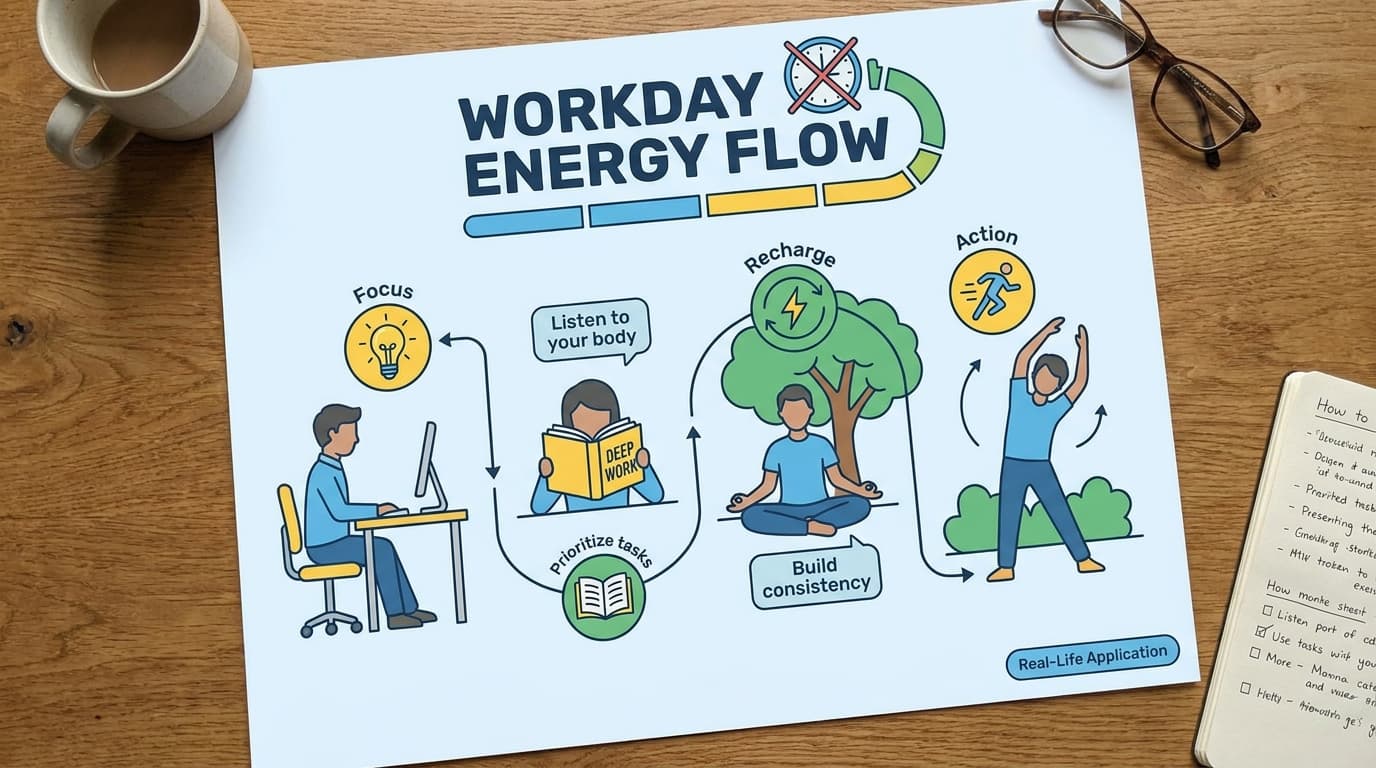
A Realistic Way to Handle a To-Do List That Never Gets Shorter
A Realistic Way to Handle a To-Do List That Never Gets Shorter starts with understanding that your brain wasn't built for modern digital bombardment. Stop viewing an unfinished list as...

ScoreRead Editorial Team
Editorial Team

A Realistic Way to Handle a To-Do List That Never Gets Shorter
A Realistic Way to Handle a To-Do List That Never Gets Shorter starts with understanding that your brain wasn't built for modern digital bombardment. Stop viewing an unfinished list as a personal failure and start seeing it as a permanent feature of a high-achieving life.
Modern information overload drains your cognitive energy, leaving you stuck in a cycle of task-switching and productivity anxiety. You need a system that respects your mental limits instead of fighting them every day.
This guide explains the triage method to help you prioritize what actually matters and finally let go of the rest.
Table of Contents
- Why Your Brain Struggles With a To-Do List That Never Gets Shorter
- How the Triage Method Reclaims Your Schedule
- Why You Should Prioritize the Tasks That Scare You Most
- Is Perfectionism Making Your Workload Heavier Than It Needs to Be?
- Practical Tools to Externalize Your Memory and Reduce Stress
- The Power of No: Setting Psychological Boundaries
- Frequently Asked Questions
- Frequently Asked Questions
- Conclusion
Why Your Brain Struggles With a To-Do List That Never Gets Shorter
Finding a realistic way to handle a to-do list that never gets shorter starts with accepting your brain's limits. Your neurology is essentially running on 200,000-year-old software that was never meant for the digital age. Back then, survival meant reacting to immediate physical threats, not managing a stream of 50 emails and three different messaging apps simultaneously.
Celeste Lennon notes that our neurology isn't designed to manage this level of scattered attention. When you constantly switch between tasks, you create a cloudy brain effect that makes even simple decisions feel heavy. According to research shared by She Defined, this digital bombardment drains your cognitive energy faster than you can replenish it.
Imagine a typical Tuesday morning where you have nine browser tabs open, each representing a half-finished project. You start writing a report, but a Slack notification pops up, and suddenly you are down a rabbit hole of calendar invites. By noon, you have worked for four hours but haven't actually finished a single thing on your list because your focus is fragmented.
Chasing a zero inbox or a completely checked-off list is often a recipe for burnout rather than a sign of success. High achievers will always have more ideas and ambitions than there are hours in the day. If you struggle with this constant pressure, looking into stoicism books for discipline can help you focus on what you can control rather than the sheer volume of tasks.
Dr. Nicole Byers suggests that as a professional with big career goals, your list is never going to be totally finished. That is okay. Accepting the feeling of being overwhelmed, rather than fighting it, allows the stress to pass much faster than trying to power through with sheer willpower.
You might also try giving only 60% effort on routine tasks like weekly reports or basic admin. This saves your high-value energy for the scary tasks that actually move the needle toward your goals. When you stop trying to give 100% to every minor email, you find you have much more mental clarity for the work that matters, which is a core concept in the best books for building discipline.
- Practice self-soothing touch by placing a hand over your heart or taking brief breathing breaks to lower cortisol when the list feels heavy.
- Use the Triage Method to filter your list into Today for urgent items, This Week for important tasks, and Never for items that stem from people-pleasing.
- Tackle one daunting task each morning during your peak energy window before the digital noise of the day takes over.
- Apply the Pomodoro Technique by working in 25-minute focused intervals followed by short breaks to maintain mental efficiency.
- Audit your list for tasks where good enough is actually the most productive outcome to avoid the perfectionism trap.
The Myth of 100% Productivity
Chasing a zero inbox is often a recipe for burnout rather than a sign of success. The human brain hasn't changed much in 200,000 years and isn't designed for constant digital bombardment. High-achievers will always have more ideas than time, so an unfinished list is actually a sign of a full, ambitious life.
Imagine a manager who spends all Sunday clearing tasks only to wake up to ten new requests on Monday morning. By trying to give 100% effort to every minor chore, they end up with a cloudy brain and no energy left for the high-stakes projects that actually move the needle.
Shifting your perspective can help you find a realistic way to handle a to-do list that never gets shorter without sacrificing your mental health.
- Accept the feeling of overwhelm when it hits so the emotion can pass through you faster.
- Use 25-minute Pomodoro intervals followed by short breaks to keep your mental efficiency high.
- Give only 60% effort to routine admin tasks to save your best energy for high-stakes work.
How the Triage Method Reclaims Your Schedule
Categorizing a massive list isn't just about order; it's about survival. Our brains haven't changed much in 200,000 years and simply aren't built for the digital bombardment we face every morning. The Triage Method solves this by forcing a brutal filter on your time, separating the immediate essentials from the noise that drains your spirit. It moves you away from a reactive state and into a position of control.
The heart of this system is the "Never" pile. We often carry "should-do" tasks that are actually just ghosts of people-pleasing or perfectionism. Moving these items to a permanent "Eliminate" list frees up the mental space needed for discipline and mental clarity. If a task doesn't drive your specific goals or maintain your well-being, it doesn't belong on your schedule. Also, accepting that some things will simply never get done is a vital part of emotional regulation.
Imagine a professional drowning in 50 unread emails while facing 10 project deadlines. Instead of panicking, they apply the Today/This Week/Never filter. They realize that 40 of those emails are FYIs that can wait, and three of the deadlines are self-imposed. By triaging, they identify the one "scary" task—the difficult proposal they’ve been avoiding—and commit to it first. This shift from busy work to meaningful work changes the entire trajectory of their day.
Identifying these "Today" needle-movers requires honesty about what actually drives progress. Often, the task you're most afraid of is the one that will have the biggest impact on your career or life. Limit this list to three non-negotiable items. This prevents the "cloudy brain" caused by constant task-switching and allows you to focus your limited cognitive energy where it counts. When you focus on the 1-3 tasks that actually matter, the rest of the noise starts to fade.
- Limit your "Today" list to exactly three non-negotiable items to avoid cognitive overload.
- Move any task that stems from people-pleasing or external pressure into the "Never" or "Eliminate" pile immediately.
- Tackle your most "scary" or daunting task during your first peak energy window of the morning.
- Use 25-minute Pomodoro intervals to maintain focus on high-priority items without burning out.
- Audit your list weekly to ensure that "This Week" tasks haven't become stagnant clutter.
Defining Your 'Today' Needle-Movers
Your 'Today' list is a focused strike team of exactly three non-negotiable tasks. Since the human brain isn't naturally designed for digital information bombardment, narrowing your focus prevents the 'cloudy brain' caused by constant task-switching.
Take a manager who spends hours on 'busy work' because a difficult client presentation feels scary. That fear is actually a signal of importance. By identifying that one daunting task as a needle-mover and tackling it first, you stop hiding in low-value work and start driving real progress toward discipline and growth.
- Limit your 'Today' list to exactly three items to protect your cognitive energy.
- Identify the task you are most tempted to avoid and do it first.
- Use 25-minute Pomodoro intervals to maintain focus on high-priority items.
Why You Should Prioritize the Tasks That Scare You Most
We often gravitate toward busy work because our brains are wired for comfort over impact. Research indicates that the human brain hasn't changed significantly in roughly 200,000 years and isn't naturally equipped for the digital age's constant information bombardment. When a task feels scary, your brain flags it as a threat, nudging you toward safe, easy chores that offer a false sense of accomplishment.
This avoidance is a primary cause of cloudy brain and that heavy feeling of an insurmountable workload. While cleaning your desktop icons or refreshing your inbox feels like progress, it's often a form of procrastination. These daunting tasks are actually your biggest needle-movers, but they require more cognitive energy than routine maintenance.
Take a professional who needs to write a difficult project proposal. Instead of starting, they spend the morning updating their file structure and responding to low-priority Slack messages. By the time they finish the easy stuff, their mental battery is drained, and the proposal remains untouched. This pattern ensures your list stays long while you stay exhausted.
Breaking this cycle requires a shift in how you view discipline and consistency. Instead of waiting for the right time, you have to lean into the discomfort. Dealing with the hardest thing first prevents the stress of it hanging over your head all day.
- Identify one daunting task every morning before checking your email.
- Tackle that specific task during your peak energy window when your focus is sharpest.
- Use 25-minute focused work intervals to make a massive project feel manageable.
- Notice the urge to switch tasks and gently return to the priority item.
- Give yourself permission to do a B-minus job on routine chores to save energy for high-stakes work.
Is Perfectionism Making Your Workload Heavier Than It Needs to Be?
Trying to give every single task your absolute best is a fast track to mental exhaustion. When you treat a routine email with the same intensity as a major project, you drain your cognitive battery before you even reach the work that actually matters. Perfectionism makes you overthink simple choices, turning a thirty-minute job into a two-hour ordeal.
This 100% effort trap is a primary reason why best books for overthinking and mental clarity are so popular right now. We feel like we are failing if every outcome isn't flawless. But giving 60% effort on routine tasks is actually a sustainable strategy. It allows you to bank that extra 40% of your energy for high-stakes moments where precision truly changes the outcome.
Imagine a manager who spends four hours perfecting the font and layout of an internal weekly update that only three people read. By the time they need to prep for a high-stakes client presentation, they are too tired to think creatively. If they had accepted a good enough version of that report, they would have walked into the meeting with the mental sharpness needed to land the deal.
The brain requires breaks from deliberate concentration to solve complex problems. When you over-polish small tasks, you deny your mind the space it needs for subconscious processing. This is why your best ideas often show up in the shower or during a walk rather than while you are staring at a spreadsheet.
- Audit your list for tasks where good enough is the most productive outcome.
- Apply the 60/40 rule by identifying which items only require basic completion to be functional.
- Use the Pomodoro Technique to set a hard 25-minute limit on routine chores so you do not over-polish them.
- Practice a brief moment of self-soothing touch, like placing a hand on your chest, to lower cortisol when you feel the urge to overwork.
Practical Tools to Externalize Your Memory and Reduce Stress

Your brain is not a storage unit; it is a processing center. Research shows our neurology hasn’t changed significantly in 200,000 years, meaning it is not naturally designed for the constant information bombardment of the digital age. When you try to remember every tiny detail, you create mental clutter that drains your cognitive energy before you even start a task. Externalizing your memory into a digital tool like Todoist or Trello clears these unfinished loops and allows you to focus on the work right in front of you.
Imagine a project manager juggling five different client launches. Without a system, their mind is constantly scanning for what might be forgotten, leading to a fragmented focus. By using a digital brain dump area, they can offload every new request the moment it arrives. They are not triaging it immediately; they are simply parking it so their cognitive energy stays on the high-value work they are doing right now.
Building momentum is often the hardest part of finding a realistic way to handle a to-do list that never gets shorter. The Pomodoro Technique solves this by using 25-minute intervals of deep focus followed by short breaks. This approach is a core concept found in many of the best books for building discipline and consistency because it makes scary tasks feel manageable. Instead of facing a ten-hour project, you only have to face the next 25 minutes.
Real breaks are just as vital as the work intervals themselves. Constant task-switching is a primary cause of inattention and that feeling of an insurmountable workload. When the timer goes off, you need to step away from your desk and all screens. This gives your mind the space it needs for subconscious processing, which is often when the best solutions to your hardest problems finally appear.
- Set up a digital Inbox where every new task goes to be sorted later rather than interrupting your current flow.
- Break your most daunting task into 25-minute chunks to lower the mental barrier to starting.
- Take a five-minute screen-free break between work intervals to reduce cortisol and reset your focus.
- Use a tool like Trello to visualize your Today and This Week piles so you do not have to hold them in your head.
- Practice the Atomic Habits summary and real life application of small, consistent wins to build long-term productivity.
Using the Pomodoro Technique for Momentum
Our brains are 200,000-year-old hardware struggling with the constant pings of the digital age. This information bombardment leads to task-switching, which is a primary cause of inattention and that heavy cloudy brain feeling. The Pomodoro Technique builds momentum by forcing you to commit to just one task for a short, timed interval.
Imagine you have a daunting project proposal that has been sitting on your list for days. Instead of worrying about the hours it will take to finish, you set a timer for exactly 25 minutes. You aren't trying to complete the whole project; you are just showing up for one sprint, which significantly lowers the mental barrier to starting.
- Set a timer for 25 minutes to focus exclusively on your most daunting task.
- Take a five-minute break away from all screens to allow for subconscious processing.
- Use books for overcoming procrastination to help build these focus habits.
- Stop working when the timer dings to prevent the productivity decrease that comes from skipping breaks.
The Power of No: Setting Psychological Boundaries
Saying no is the only way to protect your cognitive energy from the constant information bombardment of the digital age. Our brains haven't changed in 200,000 years, so we aren't built to handle an infinite stream of requests. Every time you say yes to a new task, you are silently saying no to the deep work already on your list. Without boundaries, your schedule becomes a collection of other people's priorities rather than your own.
Imagine you are in the middle of a complex project when a colleague pings you for a quick sync about a minor administrative update. If you accept, the task-switching alone will cause cloudy brain and kill your momentum. By declining that low-value meeting, you stay in your peak energy window to finish the work that actually moves the needle. This is a core part of using stoicism books for discipline and mental clarity to focus only on what you can control.
Drafting a few go-to responses helps remove the guilt of setting these boundaries. Use these templates to keep your list realistic and your focus sharp.
- Use this for meetings: 'Thanks for thinking of me! I am currently focused on a high-priority deadline and will not be able to join this one.'
- Use this for new tasks: 'I would love to help, but my list for Today is full. Can we revisit this during my This Week triage on Friday?'
- Use this for project requests: 'To keep my focus on our main goal, I am declining all non-essential requests this week. Please send over the notes afterward!'
Frequently Asked Questions
It is common to feel like your workload is an insurmountable mountain. The human brain has not changed significantly in 200,000 years and is not naturally designed for the constant information bombardment of the digital age. Recent findings show that constant task-switching is the primary cause of that cloudy brain feeling and the sense that your work is impossible.
Imagine a manager who feels intense dread before their first cup of coffee. Instead of trying to finish every item, they accept that a high achiever's list is a permanent feature of life rather than a problem to solve. They use stoicism books for discipline and mental clarity to focus on what they can control, moving non-essential tasks into a Never pile to protect their peace. This shift allows the initial emotion of overwhelm to pass much more quickly.
- Give 60% effort on routine tasks to save your mental energy for high-stakes work.
- Use the Pomodoro Technique with 25-minute focus blocks to maintain concentration without burning out.
- Tackle one scary task each morning to ensure you are moving the needle on your biggest goals.
- Use a tool like Todoist or Trello to externalize your memory and reduce the stress of mental clutter.
Frequently Asked Questions
What if everything on my list feels like a top priority?
It is completely normal to feel like every task is urgent because your brain is trying to process more than it was ever built for. In fact, the human brain has not changed significantly in about 200,000 years and is not naturally equipped for the non-stop information of the digital age. When you hit this wall, the trick is to stop aiming for 100% across the board.
Try giving only 60% effort to routine or administrative tasks. This might sound counterintuitive, but it preserves your mental energy for the 'scary' tasks that actually move the needle. If the panic of a long list starts to feel physical, try a self-soothing touch, like placing a hand over your heart. This simple action can lower cortisol levels and help you regain the clarity needed to pick just one thing to start on.
How do I handle new tasks that pop up throughout the day?
The best way to handle mid-day interruptions is to treat them like incoming mail that you do not have to open yet. Constant task-switching is a primary cause of inattention and that 'cloudy brain' feeling that makes your workload seem impossible. Every time you stop what you are doing to fix a new problem, you pay a heavy cognitive tax.
Instead of acting on the new task, use a digital tool like Trello or Asana as a 'holding pen' to externalize your memory. Write the task down and immediately return to your current work. This clears the mental load without breaking your flow. Also, do not be afraid to step away for a five-minute walk if a new task feels complex. Your brain often uses that downtime to solve problems in the background while you are not even thinking about them.
Can the Triage Method work for personal tasks as well as work?
Yes, it works perfectly for home life. Personal tasks often feel heavier because they lack the rigid structure of a workplace. Since the human brain has not changed much in 200,000 years, we are not naturally wired to track a hundred different chores and errands at once.
By triaging your personal life, you give yourself permission to stop thinking about the garage cleanup until Saturday. This prevents that cloudy brain feeling caused by constant task-switching between work and home worries. It turns your home into a place of rest rather than a second job site.
How do I stop feeling guilty about tasks I move to the 'Never' list?
The guilt usually happens because we equate our worth with how much we get done. Here is the thing. A to-do list for a high achiever is never actually finished. It is a permanent feature of your life, not a problem you need to solve.
If you feel bad about dropping a task, remember that working without breaks actually decreases your overall efficiency. Moving something to the Never list is a strategic move to save your best energy for the tasks that move the needle. Think of it as a gift to your future self so you can avoid burning out on things that do not really matter.
Conclusion
Managing a to-do list that never gets shorter is not about finding a magic app or working more hours. It is about accepting that your brain was not built for this much digital noise. When you use the triage method, you stop trying to clear the deck and start focusing on what actually moves the needle. You learn that some tasks deserve your best energy, while others are just distractions dressed up as priorities.
The bottom line is that a finished list is usually a sign of low ambition, not high productivity. High achievers will always have more ideas than time. Instead of feeling guilty about what is left undone, try to find peace in the unfinished. Your next move is simple: look at your list right now and find one task to move to the Never pile.
Choosing what to ignore is just as important as choosing what to do. Focus on the one or two things that scare you most today and let the rest wait. A realistic way to handle a to-do list that never gets shorter is to remember that progress always matters more than a row of checkmarks.

Send it to someone who should read it next.
About the author

ScoreRead Editorial Team
Editorial Team
Every article on ScoreRead is researched, written, and edited by our editorial team before publishing, so the ideas we cover stay accurate, clear, and genuinely useful.
View all articles