Why Your Brain Treats Notifications Like a Threat, Not a Distraction
Your brain uses ancient survival hardware to process sudden alerts, which is why your brain treats notifications like a threat, not a distraction. When your phone buzzes, you feel a...

ScoreRead Editorial Team
Editorial Team
Why Your Brain Treats Notifications Like a Threat, Not a Distraction
Your brain uses ancient survival hardware to process sudden alerts, which is why your brain treats notifications like a threat, not a distraction. When your phone buzzes, you feel a physical reflex called the orienting response, much like an ancestor hearing a predator in the grass.
This evolutionary glitch means digital pings trigger a physiological alarm that forces your mind to search for danger. This constant state of high alert drains your energy and adds a hidden tax to productivity.
You will learn the science behind this instinct and how using focus modes can blunt the threat response.
Table of Contents
- Why Your Brain Treats Notifications Like a Threat, Not a Distraction
- The Evolutionary Glitch: Why Pings Trigger Survival Instincts
- The Hidden Cost of Digital Interruptions
- The Predictive Brain: Why Your Mind Hates Surprises
- Hyperconnectivity and the Invasion of Private Spaces
- How to Blunt the Threat Response and Reclaim Focus
- Frequently Asked Questions
- Frequently Asked Questions
- Conclusion
Why Your Brain Treats Notifications Like a Threat, Not a Distraction
Your brain handles a phone buzz using ancient survival hardware designed to spot predators. This triggers an orienting response, which is a physical reflex where your body tightens and focus snaps toward the noise. Since the brain is a prediction machine, sudden alerts break your flow to scan for danger. These interruptions increase task completion time by 27 percent because your mind treats the ping as a threat rather than a simple distraction.
Imagine an ancestor walking through tall grass. A sudden rustle could be a leopard, so the nervous system is wired to drop everything and focus immediately. Today, your hardware reacts to a pocket vibration with that same primal intensity. Your brain never got the memo that a social media alert is not a predator. Understanding this biological glitch is key to building discipline and consistency in your daily work.
- Recognize the orienting response as a physical reflex, not a lack of willpower.
- Use Focus Modes to whitelist essential human contacts only.
- Turn off non-human notifications for 24 hours to lower your baseline stress.
The Evolutionary Glitch: Why Pings Trigger Survival Instincts
A phone vibration feels physically jarring because your brain uses ancient survival hardware to process it. Instead of seeing a simple notification, you experience an orienting response. This is an instinctive reflex where your body tightens and your attention snaps toward the source of the noise or movement. It is a biological survival mechanism, not a sign that you lack willpower.
Imagine you are an ancestor 10,000 years ago walking through tall grass. A sudden rustle nearby could be a leopard. In that moment, your brain functions as a prediction machine, forcing you to drop everything to scan for danger. It never got the memo that a pocket vibration is not a predator. This evolutionary glitch creates a constant state of high alert that drains your mental energy.
The cost of missing a threat historically outweighed the cost of a false alarm, which is why we are wired to overreact. Tamzidul Haque points out that our bodies react to a buzz with the same intensity as a physical threat. This explains why 60 percent of students are distracted by phone sounds like clicks and beeps according to a study from the University of Montpellier. These aren't just noises; they are signals that break your mental loop.
When a ping happens, it causes a breach of processing fluency. As Sibylle Turo explains, our cognitive system tries to keep activities running as smoothly as possible. Unexpected alerts contradict the brain’s anticipations, forcing it to reset its predictive models and search for the cause of the disruption.
This is why digital interruptions increase the time it takes to complete a task by 27 percent. It takes more than a minute just to return to the original task after a single email check. This distraction makes overcoming overthinking and gaining mental clarity much harder than it needs to be.
Understanding that this is a physical reflex is the first step toward building discipline and consistency in your work. You can't fight millions of years of evolution with willpower alone. You have to change your environment to stop the survival alarm from going off.
- Identify the orienting response as a reflex so you can stop feeling guilty about being distracted.
- Silence non-human notifications to reduce the number of false alarms your brain has to process.
- Use focus modes to whitelist only essential contacts, teaching your brain that silence is a safe state.
- Batch your check-ins to maintain processing fluency and avoid constant predictive resets.
Ancient Hardware in a Modern World
Your brain is still running on software designed for survival on the savanna. Back then, ignoring a rustling bush could mean death, while overreacting to a false alarm just meant a bit of wasted energy. This is why a simple phone buzz feels like an emergency. Your nervous system triggers an orienting response, which is a physical reflex that snaps your attention toward the sound before you can even think.
Consider a student trying to focus in a quiet room. Even if they know the phone is just a device, a 2015 study found that 60 percent of students are distracted by phone sounds like clicks and beeps. Tamzidul Haque notes that your body reacts to that vibration with the same intensity it would a physical threat. Your heart rate might even spike because your ancient hardware never got the memo that a text message isn't a predator.
This constant high alert makes overcoming overthinking and gaining mental clarity much harder. When your phone pings, it breaks your processing fluency. Your brain is a prediction machine that needs stability, so every unexpected beep forces it to stop and reset its mental model.
- Disable all non-human notifications to stop your brain from treating app updates like survival threats.
- Assign unique ringtones to essential contacts so your brain can distinguish between a real person and a generic alert.
- Keep your phone in another room during deep work to prevent the physical buzz from triggering an orienting response.
The Hidden Cost of Digital Interruptions
How much time are we actually losing to those minor distractions? It is a lot more than the few seconds it takes to clear a notification. Every time your phone pings, it causes a breach of fluency that forces your brain to reset its internal predictive models. Research from the University of Montpellier indicates that these interruptions increase the total time it takes to complete a task by 27 percent.
This creates a daily productivity tax that most people ignore. Employees typically spend 90 minutes every day just catching up after email-related interruptions. This constant context switching wears down your mental energy. It is the reason your brain feels totally fried by 3 PM, even if you have not finished your main project yet. Your mind has been working overtime just to find its place again and again.
Think about the last time you were in the middle of a complex task and checked one quick email. You saw the message, realized it was not urgent, and went back to your work. But then you sat there for over a minute just trying to remember what you were doing before the beep. You had to rebuild the mental loop you were in, which is much harder for the brain than staying in the flow.
These tiny gaps in focus act like a leak in a bucket. You might think you have eight hours to work, but once you account for the time spent re-focusing, you really have much less. This is why using the 27 percent rule is so helpful for planning. If you think a project will take four hours, you should probably budget five to account for the inevitable digital friction.
- Add 27 percent more time to your project deadlines to account for the real-world cost of digital distractions.
- Check your email in specific batches rather than leaving the window open all day to protect your processing fluency.
- Turn off non-human notifications like app alerts and store pings to stop your brain from constantly searching for threats.
- Schedule a deep work block for 90 minutes each morning to get ahead of the daily productivity tax before the interruptions start.
The 1.5-Hour Daily Productivity Tax
Every time your phone pings, you are not just losing the few seconds it takes to glance at the screen. You are paying a productivity tax that adds up to about 90 minutes every single day. Research from the University of Montpellier shows that employees spend over an hour and a half just catching up after these digital interruptions. This happens because your brain cannot simply snap back to deep work; it has to rebuild the mental model you were using before the buzz.
Imagine you are in the zone writing a report when an email banner slides into view. Even if you do not click it, your brain’s threat-detection system has already pivoted to analyze the novelty. You look back at your screen and realize you have lost the thread of your logic. You then spend several minutes re-reading what you just wrote just to find your place. Do this all morning, and your brain feels fried by 3 PM because it has been working overtime to constantly reset its predictive models.
- Close your email tab entirely when working on a primary task to remove the visual temptation of incoming mail.
- Batch your responses into two or three specific windows per day rather than reacting to every alert in real-time.
- Turn off all non-human notifications to stop your brain from treating every app update like a potential predator.
The Predictive Brain: Why Your Mind Hates Surprises
Your brain is essentially a prediction machine. It works hard to create anticipatory loops, guessing what will happen next so it can save energy and adapt your behavior. When you are deep in a task, your mind is in a state of smooth cognitive activity where everything feels predictable. A notification is stressful because it represents a sudden surprise that the brain cannot predict, forcing your mental gears to grind to a halt.
This matters because your mind hates surprises. Unlike a planned break where you decide to stop, a digital ping is a sudden breach of environmental consistency. Because an alert can be anything, like a work email or a random social like, your brain cannot prepare for it. This unpredictability prevents the brain from minimizing the surprise response, triggering an automatic search for the cause and diverting all your focus.
Imagine you are finally in a flow state, working on a project that requires your full attention. You have built a mental map of every moving part, and your thoughts are moving with ease. Suddenly, your phone buzzes on the desk. Even if you do not pick it up, that one vibration shatters the predictive loop your brain worked so hard to build.
Your brain immediately shifts from processing the task to identifying the intruder. You are no longer thinking about the project. Instead, you are unconsciously calculating whether that buzz signals something that needs your immediate survival response.
The brain treats this interruption as a high-priority event because the cost of ignoring a potential threat was historically much higher than the cost of overreacting. This is why your brain treats notifications like a threat, not a distraction, because it prioritizes survival over your to-do list. Right now, this ancient hardware is still running the show. When a notification breaks your flow, you are not just distracted.
This is why getting back into the zone feels so exhausting because you have to rebuild that entire predictive loop from scratch.
- Batch your notifications into three specific windows per day to make them predictable for your brain.
- Turn off all non-human alerts, such as app updates or news pings, to reduce the frequency of surprises.
- Use Focus Modes on your devices to whitelist only essential contacts during deep work blocks.
- Schedule your breaks at the same time every day to train your brain to expect the transition.
Breaching the Mental Flow
Our brains crave what Sibylle Turo calls processing fluency, a state where mental activities proceed as smoothly as possible. To maintain this flow, the brain acts as a prediction machine, constantly running anticipatory loops to guess what happens in the next few seconds. When a notification pings, it isn't just a distraction; it is a breach of fluency. It shatters the brain's internal map of what was supposed to happen, forcing your cognitive system to scrap its current model and start over.
Imagine you are finally making headway on a difficult project. Your thoughts are moving with ease because your brain has predicted the next five steps of the task. Suddenly, your phone emits a sharp beep or vibration. Because you cannot predict whether that sound is a critical work update or a random social media like, your brain cannot minimize the surprise response. In a study of 349 students, 60 percent reported being distracted by these simple phone sounds, which trigger an instinctive orienting response that snaps your attention away from your work.
The stress of a notification doesn't come from the message itself, but from its unpredictability. A planned break doesn't hurt your focus because your brain expected it. An unexpected alert, however, acts as a high-priority intruder. This is why it takes more than a full minute to return to your original task after even a brief interruption. You aren't just looking at a screen; you are rebuilding your entire mental predictive loop from scratch.
- Silence all non-essential clicks and beeps that trigger the physical orienting response.
- Schedule your digital check-ins at fixed times to help your brain predict and prepare for transitions.
- Batch your notifications into three specific windows per day to maintain a higher level of processing fluency.
- Use Focus Modes to whitelist only essential human contacts, teaching your brain that silence is safe.
Hyperconnectivity and the Invasion of Private Spaces
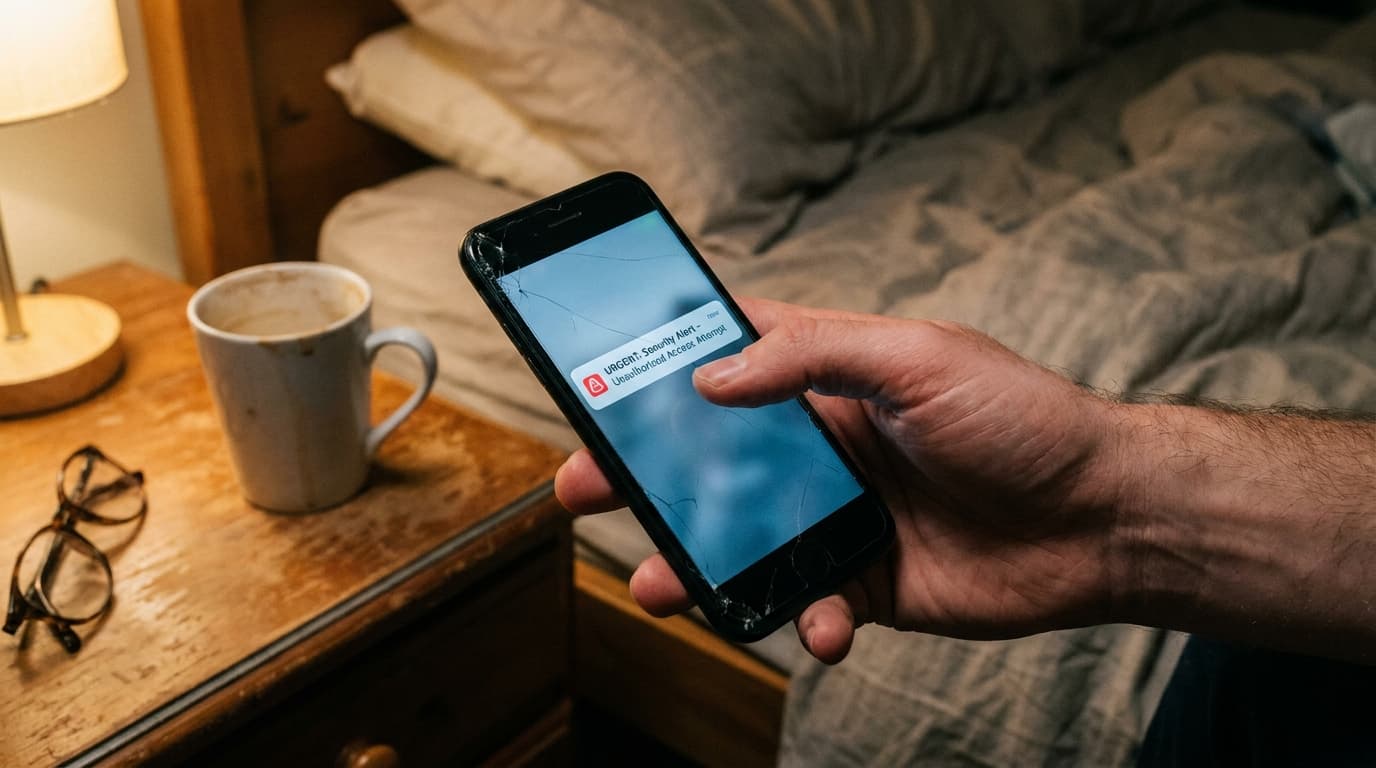
Smart homes were supposed to make life easier, but they often just expand the battlefield for our attention. When your living room is filled with internet-connected devices, your brain never truly gets to power down its threat-detection software. Because the brain functions as a prediction machine, it expects your home to be a consistent, safe space where it can minimize cognitive load.
Every smart alert from a kitchen appliance or security camera forces an orienting response—a physical tightening where your body prepares for a potential predator. This isn't just annoying; it is taxing. Research shows that interruptions increase the time it takes to complete a task by 27 percent, and that includes the simple task of relaxing or connecting with your family.
Imagine you are finally sitting down for a quiet dinner after a long day. You have put your phone away, but suddenly your smart fridge chirps because the water filter is at 10 percent life, or your doorbell pings your watch because a moth flew past the sensor. Your brain treats these as urgent survival signals. The invasion isn't just about privacy; it is about the constant breach of your processing fluency in the one place you should feel most secure.
To reclaim your peace, you need to treat your home network like a professional workspace. This helps maintain the mental clarity needed to actually recover from the day's stress. If a device does not need to tell you something right this second to keep you safe, it should not have the right to make a sound.
- Audit every smart device in your home and disable push notifications for non-emergency status updates.
- Set Do Not Disturb schedules for home hubs and smart speakers to ensure evening hours remain a low-threat environment.
- Unsubscribe from appliance alerts like laundry completion or fridge filter status that can wait until you manually check them.
- Use physical zones where no smart devices are allowed to chime, protecting your brain's ability to stay in a relaxed predictive loop.
How to Blunt the Threat Response and Reclaim Focus
The most effective way to stop your brain from panicking at every ping is to remove the element of surprise. Your brain functions as a prediction machine, building mental loops to anticipate what happens next so it can save energy. When a notification interrupts you, it creates a breach of fluency that forces your mind to reset its predictive model. This isn't just a mental shift; it's a physical one where your body tightens in an orienting response, preparing for a threat that doesn't actually exist.
Recent data shows that these interruptions increase the time it takes to complete a task by 27 percent. If you work for four hours, digital distractions could be adding an extra hour of wasted effort. It takes an average of more than one minute to fully return to a task after checking just one email. Because of this, many employees spend over 90 minutes every single day just catching up from these small, seemingly harmless breaks in focus.
Imagine you are finally in a deep flow state. You are processing information with ease, and your work feels effortless. Suddenly, your phone buzzes in your pocket. Even if you don't look at it, your ancient survival hardware has already flagged that vibration as a potential predator in the grass. Your focus snaps away, and the complex mental loop you spent twenty minutes building is shattered. You aren't weak for losing your place; you are simply biologically wired to prioritize that sudden noise over your spreadsheets.
To reclaim your mental clarity, you must teach your brain that silence is safe. By using Focus Modes to whitelist only emergency contacts, you eliminate the unpredictability that causes the stress response. When you know that only a call from a loved one or a school can break through, your brain stops scanning for digital predators and finally settles into a productive, low-threat rhythm.
- Delete any app that sends non-essential engagement pings like social media likes or news alerts that don't require your immediate attention.
- Batch your remaining notifications into two or three scheduled summaries throughout the day so your brain can process them during planned breaks.
- Silence your device by default and use Focus Modes to whitelist only emergency contacts, which helps your brain associate silence with safety.
- Audit your smart home devices to ensure that non-critical appliances like fridges or washers aren't interrupting your focus with unnecessary status updates.
Frequently Asked Questions
Why does a tiny buzz feel like an emergency? It is because your brain is a prediction machine that hates surprises. When a notification breaks your focus, it causes a breach of fluency that forces your mind to reset its expectations. This disruption is a major reason why interruptions increase the total time it takes to finish a task by roughly 27 percent Source.
Think about a writer deep in a story. A single email notification pops up on the screen. Even if they do not open it, the brain snaps toward the novelty, treating the ping like a rustle in the grass. It takes more than a minute to return to your original flow after that quick check. By the end of the day, that person might have spent 90 minutes just catching up from these small breaks.
Is this just about the fear of missing out? Not exactly. While we worry about missing news, we also develop a fear of being interrupted where we expect our focus to break at any moment. This constant state of high alert keeps the body tense and the mind jumping. To fix this, you have to convince your ancient threat-detection system that a silent phone is actually a safe environment.
- Disable all non-human notifications to stop your brain from reacting to software updates or marketing pings.
- Schedule specific times to check your inbox so your mind can stay in a predictable deep work loop.
- Assign unique sounds to your most important contacts to help your brain distinguish between a true priority and a minor distraction.
- Turn your phone face down or put it in another room to remove the visual threat of a screen that lights up unexpectedly.
Frequently Asked Questions
Why do I feel anxious when my phone vibrates even if I'm not busy?
You feel that spike of anxiety because your brain triggers an orienting response the moment your phone buzzes. This is an ancient survival reflex where your body physically tightens and your focus snaps toward the source of the noise or movement. Since your brain functions as a prediction machine, it gets stressed when it cannot anticipate whether that vibration is a work emergency or just a random app alert.
Here is a quick way to blunt that feeling. Try assigning unique vibration patterns to your most important contacts. When you know exactly who is calling by the rhythm of the buzz, you remove the uncertainty that triggers the threat response. This helps your brain maintain what experts call processing fluency because the interruption feels like a planned event rather than a jump scare.
Can the brain eventually learn to ignore digital notifications?
It is very difficult for the brain to truly ignore these alerts because they are designed to be unpredictable. A study on digital distractions shows that interruptions increase the time it takes to finish a task by 27 percent even if you feel like you are staying on track. Your mind still has to stop its current predictive loop to evaluate the notification, which forces a total mental reset.
You might find that you have become numb to the sounds over time, but your productivity is still taking the hit. Employees often spend more than 90 minutes every single day just trying to catch up after these small digital breaks. Instead of trying to train your brain to ignore them, the better move is to use focus modes to stop the sounds from reaching you in the first place.
How does the 'orienting response' affect my long-term stress levels?
Think of the orienting response as a series of micro-shocks. Every time your phone buzzes, your body instinctively tightens and your attention snaps toward the sound, which is your ancient survival hardware looking for a predator. When this happens dozens of times a day, your body stays in a state of high alert that never truly resets.
Over time, these constant 'breaches of fluency' keep your cortisol levels elevated, especially as digital noise bleeds into your private living space. Here is a practical way to blunt it: use custom vibrations or tones for different people. By making the source of the sound predictable, you help your brain realize there is no 'threat,' which lowers the physical intensity of the reaction.
What is the best way to manage work emails without losing focus?
The most effective way is to move from a reactive mode to a predictive one. Since your brain functions as a prediction machine, it hates the surprise of a new notification. You will find that interruptions increase the time it takes to complete a task by 27 percent because your mind has to rebuild its focus from scratch each time you look away.
Try batching your emails into three set blocks during the day. This creates a 'predictive loop' where your brain knows exactly when it will handle messages. By removing the element of surprise, you satisfy your brain's need for processing fluency and keep your cognitive system running smoothly.
Conclusion
Understanding why your brain treats notifications like a threat, not a distraction, changes how you look at your device. We are living with ancient survival instincts that have not caught up to our digital world. When your phone buzzes, your brain reacts as if it just heard a predator in the grass. It is not a sign of weakness that you cannot ignore the sound. It is a sign that your internal alarm system is working exactly as it was designed to.
These constant false alarms cost us hours of focus and leave us feeling exhausted by the afternoon. To get your mental energy back, you need to teach your brain that silence is safe. A great first step is a quick notification audit. Try turning off all alerts from apps that are not actual people for the next twenty four hours. When you remove the surprises, your brain can stay in its flow instead of constantly bracing for the next vibration.
Reclaiming your attention is not about quitting technology. It is about setting boundaries that respect how your mind actually works. Once you turn down the noise, you can finally find the quiet you need to do your best work.

Send it to someone who should read it next.
About the author

ScoreRead Editorial Team
Editorial Team
Every article on ScoreRead is researched, written, and edited by our editorial team before publishing, so the ideas we cover stay accurate, clear, and genuinely useful.
View all articles