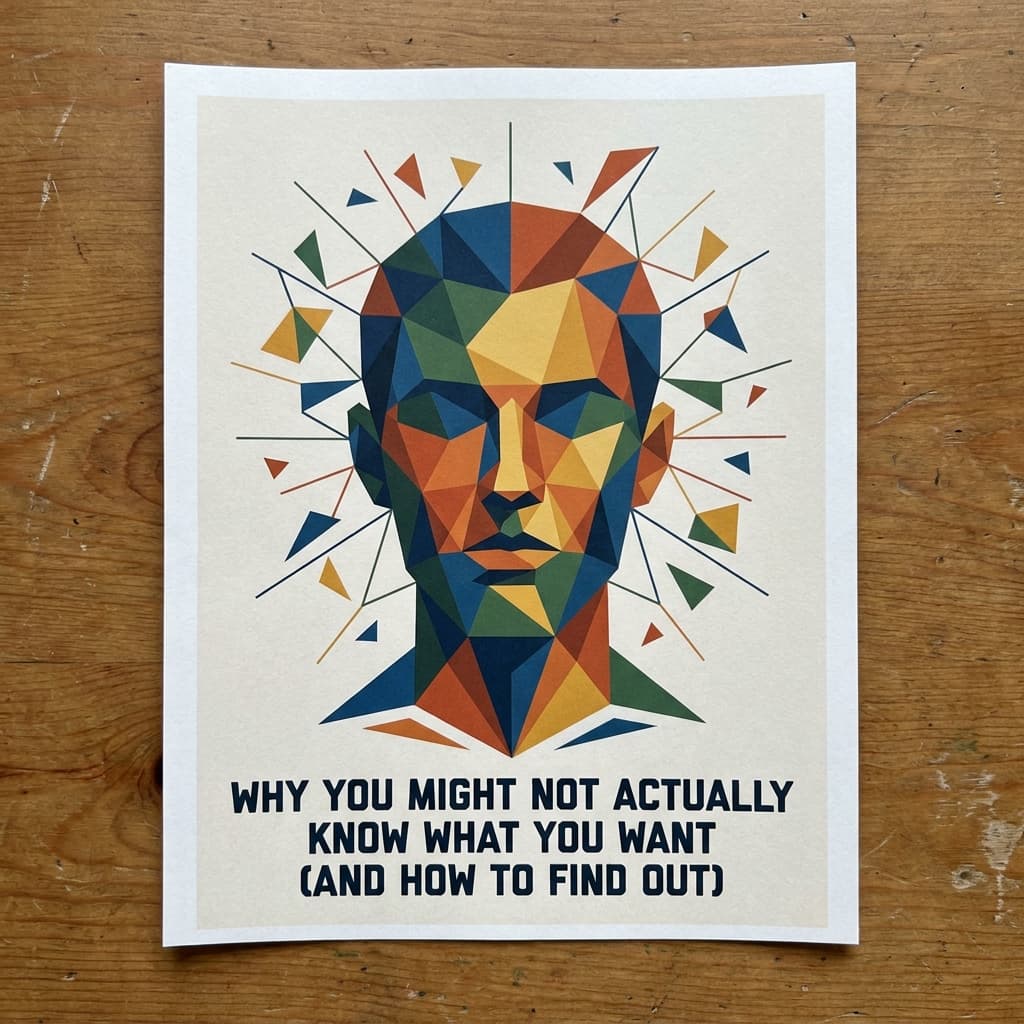
Who Are You, Anyway? How to Stop Overthinking and Start Self-Discovery
Have you ever felt like you are watching your life from the sidelines because your brain won't stop overthinking every little detail? It is exhausting to be stuck in a...

ScoreRead Editorial Team
Editorial Team

Who Are You, Anyway? How to Stop Overthinking and Start Self-Discovery
Have you ever felt like you are watching your life from the sidelines because your brain won't stop overthinking every little detail? It is exhausting to be stuck in a loop of what ifs when you just want to know who you actually are. Most of us spend way more time worrying about the future than we do understanding our own minds.
Real self discovery is not about finding a brand new person. It is about clearing away the noise to see the one who was already there. We often struggle with identifying personal values because we are too busy listening to what everyone else expects from us. But once you start asking the right questions, that mental fog finally starts to lift.
In the following sections, we will explore specific self discovery questions for overthinking and journal prompts for emotional awareness to help you get unstuck. You will also learn about building self discipline through self discovery and how to apply non fiction book insights to your daily mindset patterns. It is time to stop the spiral and start living with a lot more clarity.
The Search for the Real You (Without the Stress)
Ever feel like "finding yourself" is just another heavy item on your to-do list? It often feels like a chore because we overthink every little detail of our lives until we are exhausted. That mental loop creates a fog that hides our true values and keeps us stuck in place. But here is the thing: getting clear on your identity is less about a grand epiphany and more about simple, consistent habits that clear the clutter from your mind.
Writing helps untangle the mess in your head. Research shows that just 15 minutes of writing about emotional experiences for three days can actually boost your physical health and life satisfaction. It is not about creating a literary masterpiece. As Daniel W. Chen says, the goal is honest exploration, not perfect answers. Using specific self-discovery questions for breaking overthinking habits helps you see patterns that were invisible when you were just spinning your wheels in daily life.
You are getting a practical toolkit for your brain. Whether you use a journal with 200 questions or try uncensored freewriting to bypass your inner critic, the focus is on building self-discipline through small, manageable steps. By applying insights from non-fiction books to your own mindset patterns, you move from overthinking to actually living. It is about finally making space for your real self to show up without the unnecessary stress.
Key insights:
- Journaling for just 15 minutes can bypass your inner critic and reveal hidden thought patterns.
- Self-discovery is more effective when you focus on honest exploration rather than finding perfect answers.
- Using structured prompts helps bridge the gap between your daily performance and your actual identity.
Breaking the Overthinking Loop With the Right Questions
Ever feel like your brain is a browser with fifty tabs open and they are all playing music you cannot find? That is the overthinking loop in action. It is a cycle that feeds on itself because we try to solve our problems using the same circular thoughts that created them in the first place. To break out, you need to change the medium. Instead of just letting thoughts bounce around your skull, you have to start writing them down. This is the most effective way to hit the stop button on that internal repeat cycle and finally get some peace.
Key insights:
- Uncensored writing for fifteen minutes helps you bypass the inner critic and access your real thoughts.
- The Pennebaker study proves that short bursts of emotional journaling can lead to measurable physical health improvements.
- Moving from What if? to What is? helps ground your mindset in reality rather than anxiety.
- Resistance to a specific question often means that prompt holds the most potential for a personal breakthrough.
Finding Your Values Using 'The Subtle Art' and Other Book Insights
Most people pick up a non-fiction book looking for a manual on how to live, but the real magic happens when you use those pages as a mirror instead. Think about Mark Manson's approach in The Subtle Art of Not Giving a F*ck. It is not really about being indifferent. It is about identifying personal values using the subtle art book's core logic: choosing what is actually worth your struggle. We often overthink because we try to care about everything we are told to care about. When you read with the intent of applying non fiction book insights to mindset patterns, you stop asking what the author wants you to do and start asking what your reaction to their words says about you.
The Discomfort Rule: Why Your Hardest Thoughts Matter Most. Have you ever felt a sudden urge to close a book or skip a journal prompt because it felt too heavy? That is exactly where you should stay. This resistance is a signal that you have hit something important. The reality is that the prompts that make you squirm are usually the ones that hold the biggest insights. If a question about your past or your purpose makes you want to look away, it is because it is touching a nerve that needs attention. Growth happens in that tension, not in the easy answers that make you feel good immediately.
Key insights:
- Use non-fiction books as mirrors to reflect your own values rather than just following them as manuals.
- Writing about emotional experiences for 15 minutes can lead to measurable improvements in physical health.
- Resistance to a specific journal prompt is often a sign that the topic holds a significant personal breakthrough.
- Uncensored freewriting is essential to bypass the inner critic and access authentic thoughts.
The Discomfort Rule: Why Your Hardest Thoughts Matter Most
Ever looked at a journal prompt and immediately felt the urge to run away? That sudden tightening in your chest is a massive green flag. It is a sign you have hit a nerve. In the world of self-discovery, resistance isn't a wall. It is a map. Think of it like a cat staring at a closed door. You just know something interesting is behind it. When a question makes you squirm, you have found the exact spot where your growth is waiting to happen.
This is how you build self discipline through consistent self discovery. You are training your brain to stay present when things get awkward. Whether you are identifying personal values using the subtle art book or exploring your past, the real shifts happen when you stop running. If a prompt feels heavy, stay with it. That discomfort is just the sound of a breakthrough starting to happen.
Key insights:
- Resistance to a specific prompt usually indicates a significant area for personal growth.
- Short bursts of honest writing about difficult topics can lead to measurable health benefits.
- The objective of journaling is the process of exploration rather than finding a perfect answer.
7 Dimensions of Self-Discovery: A Simple Map
Ever feel like you are just a collection of habits and reactions? Most of us do because we haven't mapped out the territory of who we actually are. The Life Note AI framework breaks this down into seven distinct dimensions: identity, values, purpose, emotions, relationships, your past, and your future. It is not about finding one true self hidden under a rock. Instead, it is about looking at these different areas to see where you are aligned and where you are just going through the motions. Think of it as a simple map for a complex brain.
One of the most powerful parts of this map is looking at your past to gain what experts call narrative agency. This is not just about reminiscing. It is about feeling like you are the hero of your own story rather than a background character. When you write about your history, you start to see patterns in your mindset that were invisible before. Research shows that when people find more coherence in their personal stories, their mental health often starts to improve. You are essentially rewriting your future by finally understanding the chapters that came before.
Now consider a specific tool for your future: the Best Possible Self exercise. A study by Laura King in 2001 showed that writing about your best future self for just four days can significantly lift your mood and even keep you physically healthier. Participants who spent twenty minutes a day visualizing a life where everything went right ended up visiting the doctor less often. It sounds simple, but it works because it forces you to stop overthinking current problems and start identifying the personal values that truly drive you. This is not just wishful thinking. It is a way to build the mindset patterns needed for real growth.
To try this, commit to a four-day writing habit. Spend fifteen minutes each day describing a future where you have worked hard and succeeded in your goals. Do not edit yourself or worry about grammar. This process helps you bridge the gap between where you are now and where you want to go. It makes self-discipline feel less like a chore and more like a path toward someone you actually like. When you stop trying to have all the answers and just start writing, you will be surprised at how quickly the fog begins to clear.
Key insights:
- Journaling about your past helps build narrative agency, making you feel more in control of your life story.
- The 4-day Best Possible Self exercise is scientifically proven to boost mood and reduce illness visits.
- Honest exploration is more important than finding perfect answers when using self-discovery prompts.
- Self-discovery is organized into seven key dimensions, including identity, values, and relationships.
Visualizing Your Best Future Self
What if you could write your way into a better mood? A 2001 study by King found that people who spent four days writing about their best possible future selves saw a huge boost in life satisfaction. They even got sick less often. This isn't about magic or manifesting. It is about visualizing a version of you that has reached its full potential and understanding what that person looks like in the real world.
Key insights:
- Spending just four days on this specific writing exercise can lead to fewer doctor visits and better physical health.
- Focusing on a best possible future self helps bridge the gap between your current habits and your true identity.
- The goal of self-discovery journaling is honest exploration rather than finding a single perfect answer.
Building Self-Discipline by Knowing Your 'Why'
Why do most of us fail at being disciplined? We usually blame a lack of willpower, but willpower is a limited battery. Real discipline happens when you stop fighting yourself and start understanding your why. Think of it like trying to train a cat; you can't just force it, you have to make them want to do it. It's about choosing what is actually worth the struggle, much like the values discussed in popular books about the subtle art of prioritizing what matters. It's much easier to get things done when you aren't constantly negotiating with your own brain.
Research shows this isn't just a theory. A study by King in 2001 found that people who wrote about their best possible future selves for just four days felt more satisfied and even stayed healthier. By visualizing that future, they were building a narrative identity. When you see yourself as a person who values growth or health, those actions become part of your story. It's about moving from 'I have to' to 'This is who I am.'
Journaling helps you see the invisible patterns buried in your busy schedule. Scientists call this autobiographical reasoning - simply connecting the dots of your life. When you do this, you build narrative agency. You stop being a character in someone else’s book and start writing your own. Discipline then becomes the natural result of knowing exactly where you’re headed and why it matters to you.
Key insights:
- Discipline is about identity and purpose, not just forcing yourself through willpower.
- Visualizing your best possible future self for just four days can improve life satisfaction and health.
- Uncensored writing for 15 minutes helps bypass the inner critic to reveal authentic motivations.
- The most uncomfortable reflection prompts often provide the most significant personal growth.
Your Next Step: Start Small, Stay Honest
The science here is simple. Research shows that writing about your feelings for just fifteen minutes over three days can boost your physical health. You do not have to write a novel. You just need to be uncensored. If a prompt makes you feel uncomfortable, pay attention. Those moments of friction are usually where the biggest insights hide because they challenge your existing patterns and help you see what is really going on.
Whether you use a guide with 200 questions or a simple list of 40 prompts, the key is just to start. You are building self-trust by showing up for yourself every day. This isn't about overthinking your way to a better version of you. It is about being brave enough to see who you already are. So, grab a notebook or open an app and write one true thing today.
Frequently Asked Questions
Remember that the goal is not to be perfect, but to be honest. Research shows that writing about your experiences can actually help you build a stronger sense of who you are and where you want to go. Even if it feels uncomfortable at first, those tough moments often lead to the biggest shifts in how you see yourself.
Also, pay attention to which questions make you want to stop or feel a bit annoyed. Sometimes the prompts that make us most uncomfortable are the ones that give us the most insight. Just let your thoughts flow naturally and don't worry about making it sound smart or deep. The most valuable answers are usually the ones that feel a bit messy.
Yes, they can, but the secret is that reading is only the first step. To really shift how your brain works, you need to take those ideas and apply them to your own life through something like journaling. It is about making a connection between what the author says and your own personal story.
Here is a quick tip. If a certain chapter makes you feel defensive or uneasy, do not skip it. That discomfort usually means the book hit on a mindset pattern that is holding you back. Writing about that specific feeling is often where the biggest breakthroughs happen.
You might think you need hours of quiet time, but you really only need about 15 minutes. Studies have shown that writing for just 15 minutes a day for a few days in a row can boost your mood and even help you feel more satisfied with your life.
The goal is to write without stopping or checking your spelling. This helps you get past that inner critic that usually filters your thoughts. When you let yourself just flow for 15 minutes, you start to see patterns in your behavior that you would normally miss because you are too busy with daily chores.
If you are using a journal with specific questions, like the ones from Gerald Confienza or Life Note AI, you can get a lot done in a short window. It is more about being consistent than being fast. Even a few days of focused reflection can start to clear up the overthinking habits that make life feel heavy.
Conclusion
You do not need to spend hours journaling every day to see a shift. Just using a few journal prompts for emotional self-discovery or looking at your habits through a new lens can break those old mindset patterns. Real self-discipline comes from knowing your why, not just forcing yourself to follow a new set of rules or someone else's expectations.
Your next move is simple: grab a notebook and give yourself fifteen minutes of honest, messy writing. Do not worry about being a writer or finding the perfect answers. Just start where you are. The journey is more about unlearning the habits that hold you back than finding a brand new person. You already have everything you need to begin, and the results are worth the effort.
Send it to someone who should read it next.
About the author

ScoreRead Editorial Team
Editorial Team
Every article on ScoreRead is researched, written, and edited by our editorial team before publishing, so the ideas we cover stay accurate, clear, and genuinely useful.
View all articles