Thinking Fast or Slow? How to Pick the Productivity Framework That Actually Fits Your Brain
Ever sat down to finally get some work done, only to spend twenty minutes watching your cat chase a sunbeam? It is a common struggle where our brains just refuse...

ScoreRead Editorial Team
Editorial Team

Thinking Fast or Slow? How to Pick the Productivity Framework That Actually Fits Your Brain
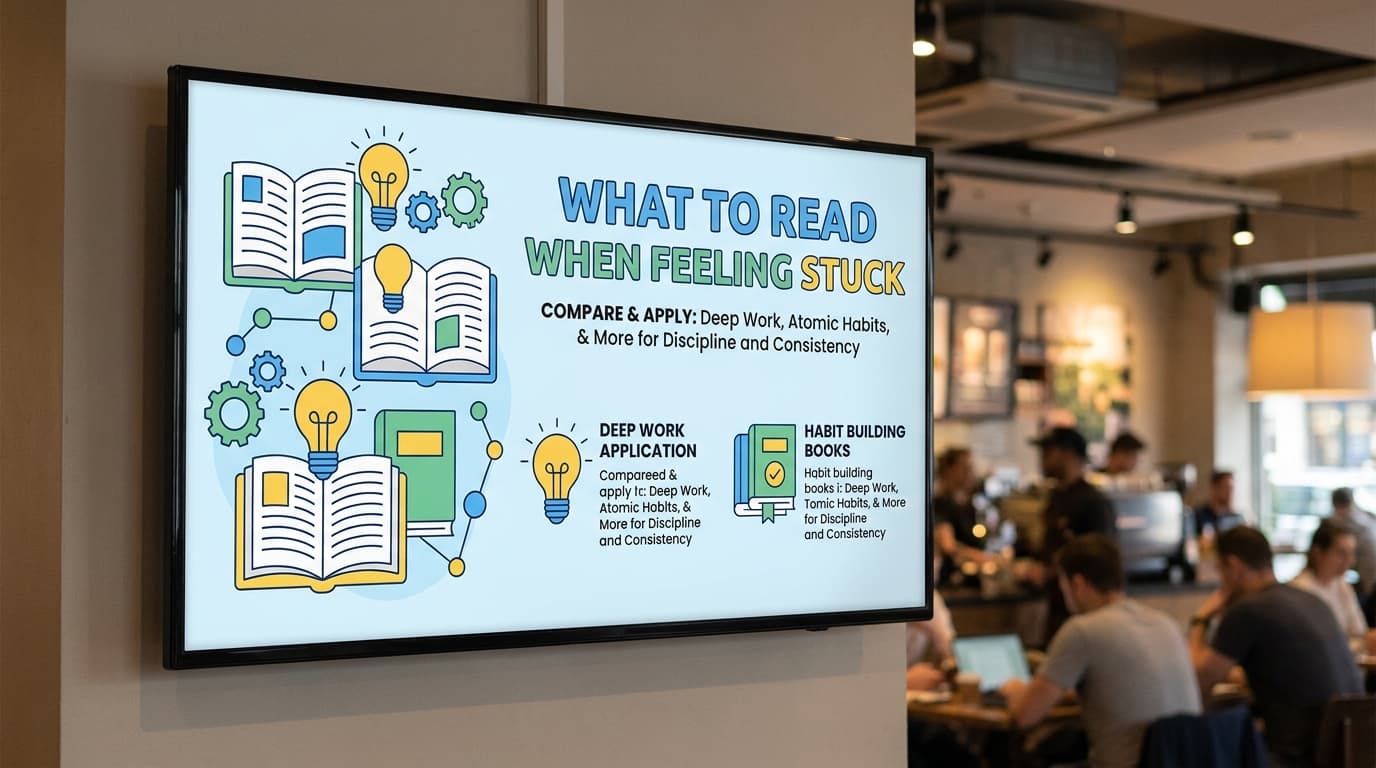
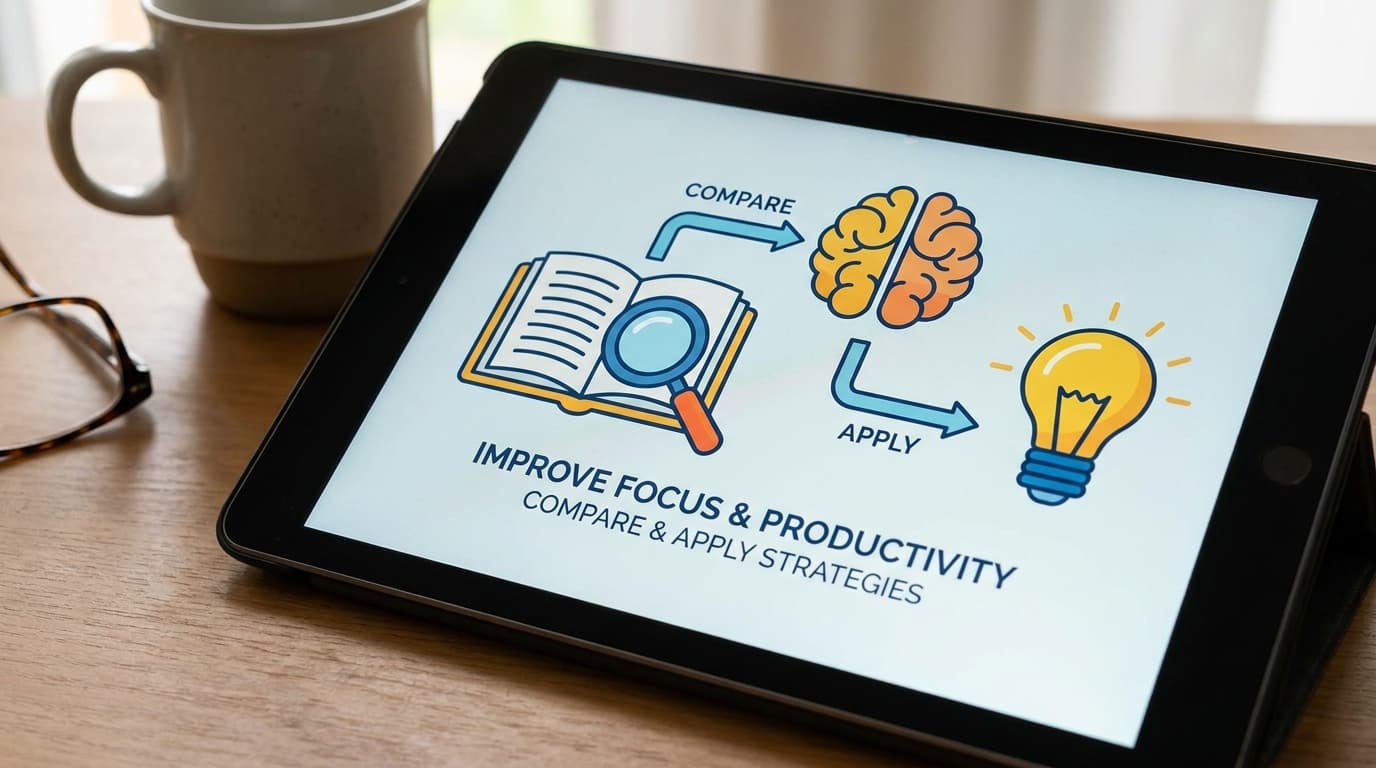
Ever sat down to finally get some work done, only to spend twenty minutes watching your cat chase a sunbeam? It is a common struggle where our brains just refuse to engage with the task at hand. If you feel stuck between overthinking every move and making impulsive choices, you need to Compare & Apply: thinking fast and slow vs blink decision making frameworks to find your mental sweet spot.
Getting things done is easier when you stop fighting your nature. We will look at atomic habits vs tiny habits for building discipline and see why habit stacking vs environment design for consistency works better than sheer willpower. We also look at digital minimalism vs deep work productivity strategies and how to choose deep work vs essentialism for extreme focus when your schedule feels like a mess.
This article helps you sort through the noise to find a routine that actually feels good. You will get a side-by-side look at the best focus frameworks out there so you can build a system that lasts. Let's figure out how to make productivity feel less like a chore and more like a habit.
Why Your Brain Gets Stuck: Finding the Right Way to Work
Ever buy a stack of productivity books only to use them as a coaster? You aren't alone. It is the classic Productivity Paradox where we spend more time reading about work than actually doing it. Our brains naturally pick the easiest path possible. This is especially true when your cat decides your keyboard is the perfect nap spot. Why fight nature when you can understand it?
Productivity is really just the art of knowing our own limits. Daniel Kahneman, the Nobel Prize winner who wrote Thinking Fast and Slow, showed that our brains have biases that keep us stuck. We think we are being logical, but often we are just avoiding friction. To get moving, we need a system that works with our biology instead of against it.
This is where frameworks like Atomic Habits and Tiny Habits come in. Whether it is James Clear’s four-step loop or BJ Fogg’s idea of anchoring new habits to old routines, these methods aim to lower resistance. We will compare these strategies side-by-side so you can finally find a way to work that actually fits your brain.
Snap Judgments or Deep Thought? Navigating Decision-Making Frameworks
Have you ever felt that strange tug of war in your head? One part of you wants to jump on a decision based on a quick vibe, while the other wants to spend hours looking at a spreadsheet. We often get stuck between these two worlds. Sometimes we rely on mental shortcuts that are just plain lazy, but other times, our gut is actually our best tool. The real challenge is knowing when to lean into speed and when to pull the brakes. This matters because your brain is always looking for the path of least resistance, and that shortcut might not always lead where you want to go.
Daniel Kahneman, a Nobel Prize winning psychologist, explains this through System 1 and System 2. System 1 is fast and emotional, like the way you instantly recognize a familiar face. System 2 is the slow, grinding effort you need to solve a complex math puzzle. While Malcolm Gladwell’s Blink strategy says we can make great choices in a split second, there is a golden rule to follow. You should only trust your gut if you are an expert in that specific area. If you are facing a brand new problem, you need Kahneman’s slow thinking to avoid falling for simple brain biases. Using the wrong framework for a complex task is how we end up with regrets.
By late afternoon, your brain usually feels like a browser with fifty tabs open. This brain fog happens because your cognitive load is totally maxed out. Every tiny choice you make during the day eats away at your mental energy. To fix this, stop keeping everything in your head. Using external systems to close open loops frees up your mind for the big stuff. You can also use environment design to make good choices automatic. By setting up your space to reduce friction, you stop wasting willpower on small things. As the blog mokacoding says, productivity is really just the art of understanding our own limitations. Build a system that protects your focus instead of trying to be a superhero.
Key insights:
- Trust your gut instincts only when you have deep, expert experience in the specific field.
- Use slow, deliberate thinking for complex or new problems to avoid common mental biases.
- Externalize tasks and use environment design to reduce cognitive load and prevent afternoon brain fog.
Thinking Fast and Slow vs Blink: When to Trust Your Intuition
Ever made a split-second choice that worked perfectly, only to overthink a simple decision later? This happens because our brains run at two speeds. Daniel Kahneman, a Nobel Prize-winning psychologist, calls them System 1 and System 2. System 1 is your fast, gut feeling mode. Think of it as your inner cat, acting on pure instinct. System 2 is the slow, heavy lifting we use for logic and math.
Malcolm Gladwell’s book, Blink, shows that snap judgments are great for high-pressure moments, but they aren't magic. They are actually just fast pattern recognition. If you are an expert, your Blink moments are usually right because you have seen the scenario a thousand times. It is like how a long-time cat owner knows exactly what a specific meow means without even looking up.
Here is the golden rule: trust your intuition when you are an expert. But for complex, brand-new problems, slow down. Use Kahneman’s System 2 to look for hidden biases. This balance helps you act fast when it counts and think deep when the stakes are new. It is about knowing when to trust the flash of insight and when to pull out a spreadsheet.
Key insights:
- System 1 is for fast, intuitive reactions based on patterns.
- System 2 is for slow, logical analysis of complex problems.
- Use Blink strategies for expertise and slow logic for new challenges.
Avoiding the 'Brain Fog' Trap
Ever wonder why you can't even decide what to eat for dinner after a long day? That is your brain hitting a wall. Daniel Kahneman, the Nobel Prize-winning psychologist, showed that our brains have specific biases that kick in when we are tired. By the late afternoon, your mental battery is drained, leading to that heavy feeling of brain fog. This is not just laziness. It is your cognitive load reaching its limit, making even tiny choices feel like a mountain.
The best way to skip this trap is to stop relying on your memory alone. David Allen calls these unfinished thoughts open loops. When you keep a dozen tasks spinning in your mind, they create a constant hum of background worry that eats your energy. By using an external system to capture these tasks, you close those loops and save your brain power for the big decisions that actually move the needle.
Think of it this way: your brain is for having ideas, not for holding them. When you clear the clutter, you stop reacting to every small stressor and start focusing on what is actually important. This simple shift helps you stay consistent even when you feel drained.
Key insights:
- Cognitive load peaks at the end of the day, making decision-making much harder.
- External systems eliminate open loops that drain mental energy.
- Closing mental loops allows for deeper focus on high-value tasks.
Building Discipline Without the Burnout: Atomic Habits vs Tiny Habits
Why do we always try to change everything at once? It feels productive to set a massive goal, but going big is often just a shortcut to failure. When you demand too much of yourself, your brain naturally rebels. Real discipline is not about one hero-sized effort. It is about showing up when you do not feel like it. Consistency beats intensity every single time because a small habit you actually keep is worth more than a huge one you abandon. Starting small is the only way to stay in the game without burning out before you even get started.
James Clear describes this process through the 1% rule. He breaks habits down into a simple four-step loop: cue, craving, response, and reward. It is a cycle that happens whether we realize it or not. To make it work for you, try what BJ Fogg calls Tiny Habits. The idea is to anchor a new behavior to something you already do, like feeding the cat or pouring your morning coffee. If you celebrate that small win immediately, your brain starts to link the action with a positive feeling. It is about making the start so easy that you simply cannot say no.
You might wonder if you just need more self-control, but environment design is often more powerful than willpower. Think of it this way: putting your running shoes right by the bed makes it much easier to get moving than if they are buried in a closet. This is about creating a frictionless space where the right choice becomes the default choice. You can also stack habits by pairing a new task with an old one. By making your surroundings work for you, you stop fighting your own brain and start making progress without the constant struggle of trying to be perfect every day.
Key insights:
- Consistency is more valuable than intensity when building a new routine.
- Anchoring new habits to existing ones like making coffee creates a natural trigger.
- Designing your environment to reduce friction works better than relying on willpower.
The Power of the 1% Rule
Ever wonder why those huge New Year's resolutions usually fizzle out by February? It is because we try to change everything at once instead of starting small. James Clear suggests that real change comes from the 1% rule. Instead of a total life overhaul, you focus on a simple four-step loop consisting of a cue, craving, response, and reward. It is about making the right choice slightly easier to repeat until it becomes automatic.
This is where the debate of atomic habits vs tiny habits for building discipline gets practical. While Clear focuses on the system, BJ Fogg emphasizes the importance of anchoring. You take something you already do, like feeding the cat or brewing your morning coffee, and attach a new behavior to it. The secret sauce is the immediate celebration. You have to give yourself a quick mental win right after the act. It sounds simple, but it tells your brain that the new routine is worth keeping.
Think of it this way. If you want to start a new habit, do not aim for a marathon. Just aim for the first step. By lowering the bar, you remove the friction that usually stops us before we even begin. Over time, these tiny actions compound into massive shifts without the usual burnout.
Key insights:
- Use existing routines like feeding the cat as anchors for new habits.
- Immediate celebration helps wire the habit into your brain faster.
- Focus on the four-step loop to understand why habits stick or fail.
Habit Stacking vs Environment Design: Which Wins?
Ever tried to force yourself to the gym at six in the morning using pure willpower? It usually fails because your brain is still half-asleep and looking for an exit. But if your running shoes are sitting right by the bed, the choice is basically made for you. This is the magic of environment design. Instead of fighting your lazy instincts, you are simply making the right choice the easiest one to grab. It turns out that being 'disciplined' is often just a result of having a better room layout.
While habit stacking is a great way to remember new tasks by anchoring them to old ones, environment design is all about removing friction. Think about your home office. If you have to spend ten minutes clearing junk off your desk just to start working, you probably will not do it. A 'frictionless' space where your laptop is already open and your water bottle is full makes focus the default setting. As James Clear and BJ Fogg suggest, the goal is to make the cue so obvious you cannot miss it.
So, which one wins? They actually work best as a team. Environment design sets the stage so you are not constantly tempted by distractions, while stacking helps you build the actual daily rhythm. Why rely on your mood when you can just rig the room in your favor? It is a lot easier to stay consistent when your surroundings are doing half the work for you.
Key insights:
- Environment design beats willpower by making good habits the path of least resistance.
- Reducing friction in your workspace can turn focus into an automatic choice rather than a struggle.
- Combining habit stacking with a curated environment creates a double-layered system for consistency.
Reclaiming Your Time: Deep Work, Minimalism, and Essentialism
Ever feel like a cat chasing a laser pointer? You are moving fast and jumping high, but you never actually catch anything. That is the gap between being busy and being productive. Most of us spend our days in a state of shallow work, reacting to every ping and notification because our digital world is built to steal our attention. Reclaiming your time starts with realizing that busyness is often just a defense mechanism used to avoid the hard tasks that actually move the needle.
Cal Newport argues that to produce anything of value, we need what he calls Deep Work. Think of this as the mental equivalent of a long, uninterrupted nap in a sunbeam. You need stretches of time where the phone is away and the door is shut. Even in a noisy environment, you can fight back by scheduling these blocks. If you do not protect your focus, social media and 'infotainment' will fill the void. It is not about quitting the internet, but about being intentional with your digital life.
One reason we feel so drained is the concept of open loops. These are the tiny, unfinished tasks - like an email you forgot to send or a bill you need to pay - that sit in the back of your head. They drain your mental battery because your brain is trying not to forget them. David Allen, the mind behind Getting Things Done, points out that externalizing these tasks into a system stops the leak. This reduces your cognitive load and saves your energy for the work that matters.
But focus is also about what you choose to do. Greg McKeown’s philosophy of Essentialism is the disciplined pursuit of less. Most of us say yes to 'good' opportunities, which leaves no room for the 'great' ones. You have to audit your to-do list for junk tasks that feel productive but do not actually help you grow. If a task is not a clear and enthusiastic yes, it should probably be a no. Doing fewer things better is always more effective than spreading yourself thin.
At the end of the day, productivity is the science and art of understanding your own limits. It is about systems over goals. When you design your environment to reduce friction, consistency becomes much easier. Whether you are habit stacking or just hiding your phone, the goal is to stop fighting your own brain. When you simplify your focus, you finally have the space to do work that you are proud of.
Key insights:
- Open loops are unfinished tasks that drain your mental energy and cause subconscious worry.
- Deep Work requires scheduled blocks of distraction-free time to produce high-value results.
- Essentialism means auditing your to-do list to remove junk tasks and focus on what is truly important.
- Environment design is more effective for consistency than relying on willpower alone.
Digital Minimalism vs Deep Work: Finding Your Focus
Ever feel like your attention is being pulled in a dozen directions? It is likely because your digital life is cluttered with noise. Cal Newport argues that to get anything meaningful done, you have to reclaim your focus through digital minimalism. This isn't about being a hermit. It is about being intentional. By scheduling 'Deep Work' blocks, you can produce high-value results even if your environment feels chaotic. This is a big part of why comparing digital minimalism vs deep work productivity strategies is so popular right now.
But there is a hidden drain on your focus: open loops. Think of these as the unfinished tasks or half-baked ideas swirling in your head. They act like background apps on a phone, quietly draining your battery. When you do not have a system to capture these thoughts externally, your brain stays in a state of low-level anxiety. Closing those loops by writing them down frees up the space you need to actually think. It is the difference between spinning your wheels and finally making progress.
Key insights:
- Digital minimalism is about choosing tools that serve your goals rather than letting apps steal your attention.
- Unfinished tasks create open loops that cause mental fatigue, so writing them down is a must for focus.
- Deep Work is a scheduled habit that protects your most valuable mental energy from daily distractions.
Deep Work vs Essentialism for Extreme Focus
Have you ever finished a long day feeling like you accomplished nothing? It is a common trap. We often mistake being busy for being productive. This is where Greg McKeown’s Essentialism comes in. His philosophy is simple. He suggests doing fewer things but doing them better. When you stop trying to do everything at once, you can finally pick the few areas where your unique talents will make a real impact on the world.
To make this work, you must audit your to-do list for junk tasks. These are the things that feel urgent but do not actually matter. Think of it like cleaning out a messy closet. If a task does not help your main goals, it should go. This is how you design an environment for focus. Clearing this clutter creates the space you need for deep work and extreme focus.
Your brain has limits. You cannot give your best energy to twenty projects at once. Essentialism helps you stop reacting to every pestering notification. This approach prioritizes consistency over perfection because it is easier to show up for one important task than a dozen minor ones. What would happen if you deleted the bottom half of your list today? You might finally find the room to do something great.
Key insights:
- Essentialism is not about getting more things done but about getting the right things done.
- Auditing your tasks for junk helps reduce cognitive load and clears the way for deep work.
- Choosing fewer goals makes it easier to stay consistent and avoid the trap of perfectionism.
Systems Over Goals: The Real Secret to Staying Consistent
Have you ever finally hit a big goal only to feel a strange sense of emptiness the next day? It is a bit like finally getting your cat to use that expensive scratching post only to realize you are not sure what to do next. Goals have an end date, but your life keeps moving. When we focus only on the finish line, we often stop doing the very things that got us there. This is why reaching a milestone often leads to a crash instead of a real lifestyle change.
This is where systems come in. Instead of saying you want to write a book, try telling yourself that you are a writer. James Clear calls this identity-based habits. It shifts the focus from what you want to achieve to who you want to become. When you truly believe you are a runner, you do not need a race on the calendar to get out the door. You just run because that is what runners do, much like how a cat will always find the one sunbeam in a room.
Building these systems works best when you start small. The Tiny Habits method suggests anchoring a new behavior to something you already do, like making your morning coffee. By using a simple loop of a cue, a response, and a reward, you make the process automatic. This creates a fail-safe for those days when your motivation is at zero. You do not need massive willpower when your environment and routines do the heavy lifting for you.
The real secret is that consistency beats perfection every single time. Even experts like Charles Duhigg agree that missing a day is just part of the process. The goal is not to be flawless but to keep your system running so that progress becomes your new normal. Think of it as building a foundation that stays solid even on days when you just want to curl up for a long nap.
Key insights:
- Focus on identity by telling yourself you are the person you want to become rather than just focusing on a task.
- Use the cue, response, and reward loop to make habits automatic and reduce the need for willpower.
- Anchor new habits to existing routines to create a fail-safe system for low-motivation days.
Frequently Asked Questions
You definitely can, and they actually make a great team. While Atomic Habits helps you build the small routines that run on autopilot, Deep Work is all about carving out big blocks of time for your most important tasks. They fill two different needs in your schedule.
Here is a simple way to do it: use habit stacking to kick off your focus time. You might decide that as soon as you clear your breakfast dishes, you will go straight to your desk and turn off all notifications. By pairing a small habit with a period of deep focus, you make it much easier to get started without needing a ton of willpower.
It also comes down to environment design. If you set up your workspace so your phone is in another room, you are using an Atomic Habits trick to make the Deep Work strategy of avoiding distractions much more likely to happen.
It is usually best to focus on just one habit at a time. Trying to overhaul your whole life at once is a quick way to get overwhelmed and give up. Most experts, like BJ Fogg and James Clear, agree that starting small is the secret to making things stick.
The reason is pretty simple: every new habit takes a bit of mental energy. If you are trying to remember to drink more water, walk 10,000 steps, and write in a journal all starting on the same Monday, your brain will likely run out of steam by Wednesday. But if you just focus on the water first, it eventually becomes a routine you do without thinking.
Once that first habit feels like it is on autopilot, you can stack a second one on top of it. This tiny approach might feel slow at first, but it is much more effective for long-term discipline than trying to do everything at once.
First off, don't feel like you need a perfectly silent office to get things done because most of us just don't have that luxury. Instead of fighting the chaos, you can use environment design to make focus the path of least resistance. If your cat keeps jumping on your desk or the kids are active, try setting up a 'decoy' spot for them or using physical cues like a closed door or headphones to signal that you're in deep work mode.
The trick is to lower the friction for your focus habits. If you only have small windows of time between distractions, use the 'tiny habits' approach to tackle one small task at a time. Consistency is much more important than perfection, so it's okay to work in shorter bursts when your environment is busy. Just remember that even Nobel prize winners like Daniel Kahneman recognize that our brains have limitations, and working around them is part of the process.
Actually, you're both. It's not really a personality trait, but rather how your brain handles different types of information. Thinking fast is your System 1, which is your gut instinct and automatic reactions, like knowing that 2 plus 2 is 4 without even trying. Thinking slow is System 2, which is that effortful, logical processing you use when you're learning a new skill or solving a tough puzzle.
You'll notice you're thinking slow when you feel that mental 'heavy lifting' or need to block out distractions to finish a task. Most productivity frameworks, like those from Cal Newport or James Clear, suggest saving your slow, deep work for your biggest priorities and letting your fast, intuitive brain handle the routine stuff. It's about balance rather than being one type of person.
Conclusion
So what does all this mean for your daily routine? Productivity is not about forcing yourself to work harder. It is about choosing the right framework for how your brain actually functions. Whether you are using a blink decision for a quick choice or leaning on system 2 for a big project, the goal is to reduce the mental load. When you pair atomic habits with a deep work block, you stop relying on willpower and start relying on a system that just works.
You do not have to choose only one path. You can mix digital minimalism with tiny habits to create a setup that feels natural rather than exhausting. Think of it like setting up a perfect napping spot for a cat. If you make the right choice the easiest one, you will find yourself falling into a good rhythm without the usual struggle.
Your next move is simple. Pick one small change and try it tomorrow. Maybe you set out your gym clothes or commit to one essential task before checking your phone. Progress comes from those small wins rather than a total life overhaul. You have the tools now, so take a breath and just start with that first tiny step.
Send it to someone who should read it next.
About the author

ScoreRead Editorial Team
Editorial Team
Every article on ScoreRead is researched, written, and edited by our editorial team before publishing, so the ideas we cover stay accurate, clear, and genuinely useful.
View all articles