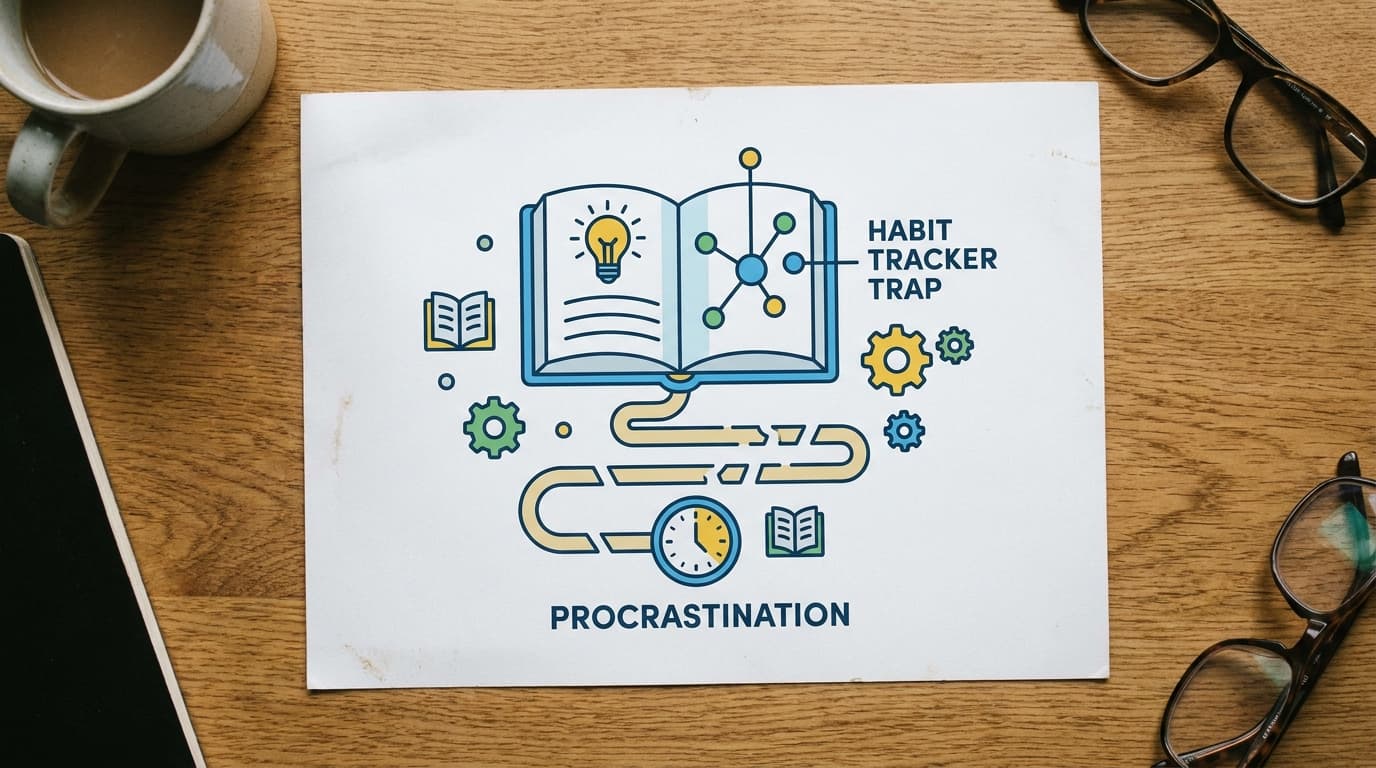
Best Books for Improving Focus and Concentration and Key Mindset Takeaways
If your attention is slipping, you need a plan. This guide features the best books for improving focus and concentration, deep work summary and actionable lessons, what to read when...

ScoreRead Editorial Team
Editorial Team

Best Books for Improving Focus and Concentration and Key Mindset Takeaways
If your attention is slipping, you need a plan. This guide features the best books for improving focus and concentration, deep work summary and actionable lessons, what to read when feeling unmotivated and stuck, best books for overcoming procrastination and building habits, mindset carol dweck summary and key takeaways to help you get things done.
Productivity is hard when you don't have the right mental tools. Understanding how your brain handles habits makes staying on task much simpler.
You'll learn how to build a growth mindset and use deep work to finally finish your biggest projects.
If your brain feels like a browser with fifty tabs open, you aren't alone. Books like Mindset and Deep Work provide the tools to sharpen your focus. Your internal perspective acts like a steering wheel, determining how much you can achieve by shifting from a fixed view to one of growth.
Think of it like a cat learning to stalk a toy. It takes practice and method. For instance, Dweck’s research shows that a growth mindset helps you see challenges as feedback rather than failure. This guide covers how to combine that mindset with habit-building strategies to stop putting things off.
Key insights:
- Identify if you are stuck in a fixed mindset about your productivity.
- Pick one strategy from Deep Work to try for ninety minutes.
- Add the word yet to any sentence about a skill you haven't learned.
Why Carol Dweck's Mindset Is the Foundation of Success
Carol Dweck's research in her book Mindset: The New Psychology of Success reveals that your internal view of yourself acts like a steering wheel for your life. A fixed mindset assumes your intelligence and talent are set in stone from birth, which creates a constant, draining urgency to prove yourself over and over. In contrast, a growth mindset is the belief that your basic abilities are just a starting point that can be developed through hard work and dedication. Even Alfred Binet, the man who invented the IQ test, believed that education and practice could bring about fundamental changes in intelligence. This means you are never truly stuck with the brain you have right now, and your potential is unknown.
The trickiest part of this journey is avoiding the false growth mindset trap. This happens when you talk a big game about learning but do not actually change your behavior when things go wrong. It is very easy to say you love feedback, but if you get defensive or start making excuses when a project gets critiqued, you are still operating from a fixed mindset. You are putting looking smart over the actual process of getting better. Understanding that simply saying you have a growth mindset is not enough without the practice of learning from failure is the first step to real change.
Think about a student who gets a C+ on a major paper. A fixed mindset student sees that grade as a label of failure and might even stop trying because they think they have reached their natural limit. But a growth mindset student sees the same C+ as a signal to study differently next time. They act like a curious cat investigating a new toy, looking at the failure as helpful feedback rather than a permanent identity. They understand that it is not always the people who start out the smartest who end up the smartest, and they use that C+ as fuel to improve their method.
Shifting your mindset is simpler than you might think, but it requires a bit of mental discipline and a change in your daily habits. One of the most effective ways to trigger a growth response is to change your internal dialogue, especially when you run into a wall or a difficult task. When you face a skill you have not mastered, remind yourself that you just have not figured it out yet. This tiny word shifts the focus from a lack of ability to a lack of time and effort, making the path forward feel like a fun challenge rather than a dead end.
To truly move past a fixed mindset, you have to be honest with yourself about how you handle setbacks in your professional and personal life. It is helpful to look back at your recent performance to see where you might be closing yourself off to growth or ignoring helpful feedback. If you can treat your own mistakes with the same curiosity a cat has for a rustling leaf, you will find it much easier to stay motivated. This mindset allows you to thrive during challenging times by focusing on stretching yourself rather than just protecting your ego.
Key insights:
- Start using the word yet whenever you face a skill you have not mastered to trigger a growth response.
- Audit your last three mistakes to see if you actually adjusted your strategy or just made excuses.
- Embrace challenges by telling yourself I love a challenge when you are confronted with difficult puzzles.
- Focus on the method and training you use to increase your attention and memory over time.
- Look for feedback that highlights how you can improve rather than just seeking praise for your talent.
The False Growth Mindset Trap
Adopting a growth mindset is more than just a buzzword you claim on a resume. It is easy to say you believe in potential, but the real test happens when you actually fail. This is the false growth mindset trap. You might use the right vocabulary while still treating every setback like a personal attack on your identity.
Think about a professional who says they thrive on feedback. They might even have a copy of Mindset: The New Psychology of Success on their desk. But the moment a manager suggests a different approach, they get prickly and defensive. Instead of looking for the lesson, they focus on protecting their ego, much like a cat hiding under the sofa after a clumsy jump.
To escape this trap, you have to move past the definitions and start looking at your actual behavior. True growth is messy and requires you to admit when your current method is not working.
Key insights:
- Audit your last three mistakes to see if you actually changed your strategy or just made excuses.
- Watch for defensive physical reactions like a racing heart when receiving a critique.
- Ask what you can do differently next time instead of explaining why it happened.
Deep Work Summary and Actionable Lessons for High Focus
Deep focus isn't just a talent you're born with; it's a habit you train. In a world designed to keep you clicking and scrolling, your brain needs a dedicated space to breathe. Think about a cat stalking a feather toy. Every muscle is still, and their eyes are locked on that one spot. Humans need that same singular precision to do great work, but we often let the noise of social media break our stride before we even get started.
Alfred Binet, the inventor of the IQ test, actually believed that method and training could increase our attention and memory. This means your current focus level isn't a life sentence. By practicing deep work, you're helping your brain become more capable of handling hard things. It's about moving away from shallow tasks and toward concentration that actually moves the needle on your goals.
Imagine you have a big project due, but your phone is a constant siren song of notifications. Instead of trying to resist the pings, you decide to go 'dark' for 90 minutes. You put your phone in a drawer and close every unnecessary tab. By the time the timer goes off, you've done more than you usually do in a whole afternoon. This approach builds the lessons for mental clarity that separate high achievers from the perpetually busy.
Key insights:
- Schedule 90-minute blocks where only one specific task is allowed.
- Turn off every single notification on your devices to prevent context switching.
- Keep a notepad nearby to jot down distracting thoughts so you can address them later.
- Start small with 20-minute sessions if 90 minutes feels too daunting at first.
Best Books for Overcoming Procrastination and Building Habits
Procrastination isn't just laziness; it's a battle with your own brain's resistance to hard things. To win, you need to stop negotiating with yourself and just start moving. Brian Tracy’s 'Eat That Frog' is a famous resource for a reason. It teaches you to tackle your most dreaded, high-impact task the very first thing in the morning. When you get the big scary stuff out of the way early, you don't spend the rest of your day feeling guilty or anxious.
You can make this even easier by using James Clear’s 2-minute rule. The idea is that any habit should take less than two minutes to start. If you can’t face a whole workout, just put on your gym shoes. If you can't write a chapter, just open the document. This lowers the barrier to entry so your brain doesn't have time to come up with excuses. It's about building momentum, much like how a cat does a little pre-pounce wiggle to get its muscles ready for a jump.
Imagine you have a messy kitchen that feels overwhelming to clean. Instead of looking at the whole mess, you 'eat the frog' by washing the one big pot you hate cleaning most. You use the 2-minute rule by telling yourself you'll only wash dishes for 120 seconds. Usually, once you start, you'll finish the whole sink. This approach is backed by the growth mindset found in Carol Dweck's research, which has earned a 4.6-star rating from over 23,000 readers. It proves that we aren't stuck with our current habits; we can literally train ourselves to be more productive.
This strategy also helps when you are feeling lost or stuck because it gives you a small, immediate win. Small wins act like a steering wheel for your day, keeping you on track instead of letting distractions take over. For more tips on choosing the right path, you can compare and apply decision making books to find what fits your style best.
Key insights:
- Write down your 'frog' the night before so you don't waste energy deciding what to do in the morning.
- Scale every new habit down to a 2-minute version to stop your brain from feeling overwhelmed.
- Treat every failure to start as a bit of feedback rather than a sign that you are lazy.
- Start your most difficult task before you check email or social media to protect your morning momentum.
What to Read When Feeling Unmotivated and Stuck

When you feel mentally paralyzed, the hardest part is just moving your feet. It is easy to think your lack of energy is a permanent flaw, but research in Carol Dweck’s Mindset - a book with a 4.6-star rating from over 23,000 readers - shows this is just a fixed mindset trap. Even Alfred Binet, the inventor of the IQ test, believed that with the right training and method, we can increase our attention and memory. You aren't actually stuck; you are just between gears and need a small spark to shift back into motion.
Imagine you are staring at a massive project that feels completely overwhelming, perhaps while you are seeking clarity during a period of self-discovery. The sheer volume of work feels like a mountain you cannot climb, so you do nothing at all. Instead of trying to summit the whole thing, you pick up The ONE Thing by Gary Keller. You stop worrying about the hundred tasks ahead and focus solely on the single smallest domino that needs to fall to make everything else easier or unnecessary. By shrinking your world down to one task, the paralysis vanishes.
Sometimes you just need a curated emergency kit for your brain to get through the slump. Since neuroscience shows our environment heavily influences how our brains perform, keeping a motivation shelf can prevent a bad afternoon from turning into a bad week. This is a great strategy when you are feeling lost and seeking a way to build consistency. It gives you a go-to resource for when your internal battery hits zero and you need someone else's words to jumpstart your own engine.
Key insights:
- Build a motivation shelf with short summaries of books like The ONE Thing and Mindset to revisit whenever your energy levels dip.
- Identify your smallest domino by asking what one specific task would make the rest of your project significantly easier to handle.
- Add the word yet to your vocabulary whenever you feel stuck on a skill to remind your brain that growth is still happening.
- Keep physical copies of your favorite focus-based books in your workspace to act as a visual cue for your long-term goals.
The Truth About Improving Your Attention Span
Many people think their ability to focus is a permanent trait, like eye color or height. But the truth is that your attention span is more like a muscle than a fixed setting. If you feel like you cannot sit still for five minutes without checking your phone, it does not mean your brain is broken. It just means your concentration muscle is out of shape from lack of use.
Even Alfred Binet, the man who invented the IQ test, argued that intelligence is not set in stone. He believed that with the right methods and consistent training, we can actually increase our memory and judgment. By treating focus as a skill rather than a gift, you stop blaming your personality and start a training program that builds mental stamina over time.
Imagine you decide to start a new hobby, like gardening or building a model. On day one, you might feel restless and find your mind wandering to your email every few minutes. Instead of saying you are just not a focused person, you realize that staying present with the task takes practice. After a week of spending twenty minutes in the dirt without your phone, you notice you are no longer reaching for your pocket because your brain has adapted to the slower pace.
The key to this change is shifting from a fixed mindset to a growth mindset. When you believe your basic abilities can be developed through hard work, you become more resilient. Instead of giving up when a task gets boring or difficult, you see the struggle as the exact moment your brain is getting stronger and more capable of deep concentration.
Key insights:
- Pick one focus exercise this week, such as reading a physical book for 20 minutes without any digital interruptions.
- Treat your concentration like a workout by gradually increasing the time you spend on a single task each day.
- Keep your phone in another room while you practice your exercise to avoid the temptation of quick distractions.
- Notice when your mind wanders and gently bring it back to the task without getting frustrated or judging yourself.
Frequently Asked Questions
If you are stuck in a loop of putting things off, you will likely find that Eat That Frog by Brian Tracy is the most helpful resource out there. It is specifically designed to help you stop overthinking and start taking action right away.
The main idea is to tackle your biggest and most difficult task first thing in the morning. By getting the hardest part of your day out of the way, you build momentum that keeps you from getting stuck later on. It is a bit like a cat finally pouncing on that red laser dot after staring at it for an hour, it feels great once you finally make the move.
Carol Dweck defines a growth mindset as the belief that your basic abilities can be developed through dedication and hard work. It is the opposite of a fixed mindset, where people believe they are just born with a certain amount of intelligence and that is all they will ever have.
In her book Mindset: The New Psychology of Success, she explains that your internal view of yourself acts like a steering wheel for your life. If you believe you can grow, you will see a setback as a sign to work harder or try a different strategy. It is similar to how a cat learns to jump a little higher each time they miss a ledge because they keep practicing until they get it right.
Yes, it really can. Here is the thing: most of us treat focus like a talent you are born with, but it is actually a skill you train. Focus and concentration can be groomed, much like a cat learning to stalk its favorite toy with precision. If you practice sitting with one hard task instead of jumping between emails, you will get more done in two hours than most people do in a whole day.
It is about building that method Alfred Binet talked about to increase your attention and memory. When you stop the constant distractions, your quality of work goes way up because you are finally giving your brain the space to do its best thinking.
If you are feeling totally stuck, start with Eat That Frog by Brian Tracy. It is basically the primary resource for killing procrastination because it forces you to take action right away. It is short, punchy, and gives you a win immediately.
After that, you will want to pick up Mindset by Carol Dweck. It helps you realize that feeling stuck is often just a fixed mindset where you think your talents are set in stone. Once you see that your abilities can grow through hard work, that heavy feeling of being unmotivated usually starts to lift. It is much easier to move forward when you stop worrying about being perfect and just focus on getting better.
Conclusion
So what happens when you combine a growth mindset with the discipline of deep work? You stop fighting against your own brain and start working with it. Improving your focus is not just about trying harder. It is about setting up a system where your habits do the heavy lifting for you. When you see a challenge as a chance to grow instead of a threat, those long focus sessions start to feel like progress rather than chores.
If you are feeling stuck today, you do not need to read every book on this list at once. Pick one that hits your biggest pain point right now. Maybe you need to eat that frog first thing in the morning or perhaps you just need to put your phone in another room for twenty minutes to see what your brain can really do. Small wins build the momentum you need to keep going.
Real change is usually quiet and happens one page or one focused hour at a time. You have the tools and the insights to move from feeling unmotivated to being truly productive. Now, go pick up that physical book, find a quiet corner, and give your full attention to the work that actually matters. You have got this.

Send it to someone who should read it next.
About the author

ScoreRead Editorial Team
Editorial Team
Every article on ScoreRead is researched, written, and edited by our editorial team before publishing, so the ideas we cover stay accurate, clear, and genuinely useful.
View all articles